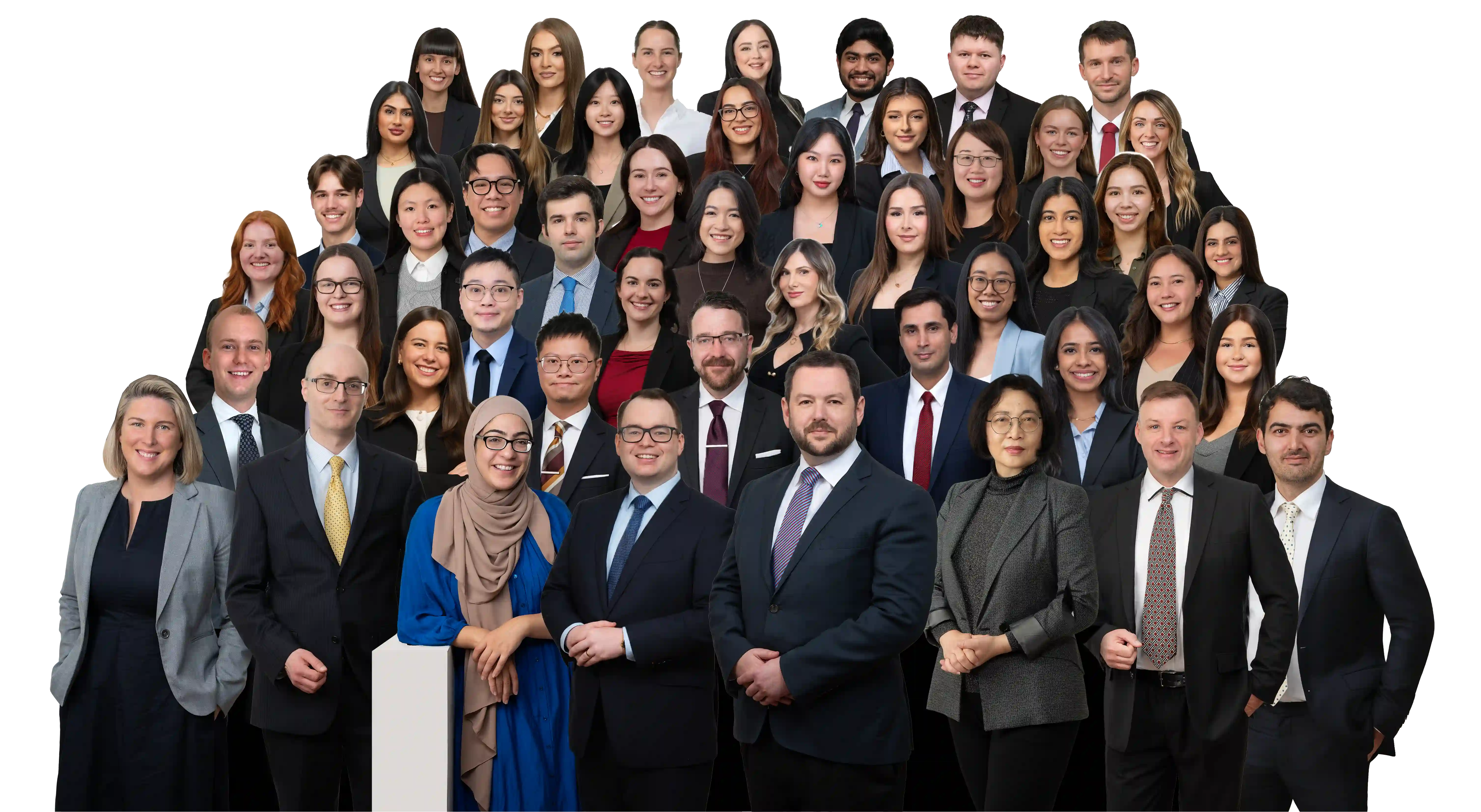
Le plus grand cabinet d'avocats indépendant spécialisé en droit de l'immigration d'Australie. Bénéficiez d'une consultation GRATUITE. Sous réserve des conditions générales.
Besoin d'aide ? Nous sommes disponibles 7 jours sur 7.


Faites-nous part de votre situation et nos avocats spécialisés en droit de l'immigration vous contacteront dans les plus brefs délais.
Faites-nous part de votre situation et nos avocats spécialisés en droit de l'immigration vous contacteront dans les plus brefs délais.


Nominé aux Telstra Best of Business Awards 2026


Lauréat du prix du cabinet d'avocats australien le plus fiable en matière de droit de l'immigration 2023-2026

Classé 1er pour le droit des migrations en 2023, 2024 & 2025

Classé parmi les meilleurs avocats spécialisés en droit de l'immigration en 2023, 2024, 2025 et 2026

Classé meilleur cabinet d'avocats en matière de migration 2024 & 2025

.svg)
Des dossiers prêts à être soumis, préparés par des avocats.
Options « Sans Visa, sans frais » disponibles.*
Première consultation gratuite (sous réserve des conditions générales).
Points clés à retenir
Le respect des conditions sanitaires est une condition légale préalable à la plupart des demandes de visa en Australie. Cette exigence aide le ministère de l'Intérieur (DHA) à gérer les risques pour la santé publique, à maîtriser les dépenses liées à la santé et aux services sociaux, et à préserver l'accès aux services de santé dont l'offre est limitée.
Le DHA évalue les demandeurs de visa au regard des critères d'intérêt public (PIC) prévus par la réglementation en matière d'immigration. Conformément aux critères d'intérêt public relatifs à la santé (4005 et 4007), un demandeur de visa doit satisfaire aux exigences sanitaires avant que son visa ne lui soit accordé. Si un demandeur n'est pas en mesure de satisfaire à ces exigences, une dérogation sanitaire peut être envisagée, en fonction de la sous-catégorie de visa et de la situation particulière du demandeur.
Une dérogation sanitaire est une exception officielle prévue pour certaines sous-catégories de visa. Si un demandeur de visa ne satisfait pas aux exigences sanitaires en raison d'un problème de santé, le visa ne peut être accordé à moins qu'une dérogation sanitaire ne soit disponible et appliquée. Toutefois, l'octroi d'une dérogation sanitaire est soumis à des conditions légales spécifiques, notamment la disponibilité d'une telle dérogation pour la sous-catégorie de visa concernée, la nature du problème de santé du demandeur et les pièces justificatives fournies.
La procédure de dérogation aux exigences sanitaires commence par la vérification de l'éligibilité de votre visa à cette dérogation. Voici une liste des visas pour lesquels une dérogation aux exigences sanitaires est possible en Australie et de ceux pour lesquels elle ne l'est pas :
Les demandeurs de visa ou les membres de leur famille ne migrant pas avec eux peuvent être éligibles à une dérogation sanitaire si le visa concerné est soumis au critère d'intérêt public (PIC) 4007. Les sous-catégories de visa concernées sont les suivantes :
Si un demandeur ou les membres de sa famille qui ne l'accompagnent pas font une demande de visa au titre du PIC 4005, aucune dérogation sanitaire n'est accordée.
Lors de l'évaluation des conditions de santé d'un demandeur, un médecin du Commonwealth (MOC) informe le DHA de son état de santé, c'est-à-dire s'il est susceptible d'entraîner des coûts de santé importants pour la communauté australienne. Conformément à la réglementation, on entend par « coût important » tout montant « supérieur au coût moyen des services de santé et des services sociaux pour un Australien ». Ces services communautaires comprennent les prestations de sécurité sociale australiennes, les pensions et les allocations, ainsi que l'éducation spécialisée, l'aide au logement et les soins à domicile et en milieu communautaire.
En 2024, le seuil de coûts significatifs (SCT) a été relevé de 51 000 $ à 86 000 $. Si l'évaluation du MOC montre que l'état de santé du demandeur pourrait entraîner des coûts potentiels supérieurs au SCT, celui-ci ne satisfait pas à l'exigence en matière de santé. Cela donne lieu à l'examen d'une dérogation pour raisons de santé, sous réserve des critères légaux et réglementaires.
[consultation libre]
Si vous souhaitez obtenir plus d'informations sur un visa, prenez contact avec Australian Migration Lawyers pour une consultation.
[/free_consultation]
Sur la base de l'évaluation d'un MOC, le DHA détermine si un visa peut être accordé ou non au regard des conditions sanitaires. Si un demandeur ne remplit pas les conditions sanitaires et qu'une dérogation est possible, il doit soumettre au ministère des pièces justificatives à l'appui de sa demande de dérogation sanitaire afin que celle-ci soit examinée. Le ministère évalue les demandes de dérogation sanitaire au cas par cas, en tenant compte de tous les critères légaux pertinents et des considérations politiques.
[aml_difference][/aml_difference]
Une dérogation pour raisons de santé ne peut être accordée que sous certaines conditions. Voici un aperçu des cas dans lesquels une dérogation peut être envisagée et de ceux où elle n'est pas applicable :
Une dérogation pour raisons de santé ne peut être accordée si le demandeur :
Pour pouvoir bénéficier d'une dérogation pour raisons de santé, le demandeur doit :
On parle de « risque de pénurie » lorsque l'état de santé d'un demandeur est susceptible d'empêcher les citoyens australiens et les résidents permanents d'accéder à des soins de santé et à des services communautaires dont l'offre est limitée. À l'heure actuelle, cela concerne notamment la dialyse et les transplantations d'organes.
Bien que ces termes ne soient pas définis dans la législation australienne en matière d'immigration, ils jouent un rôle essentiel dans l'octroi des dérogations. Voici ce qu'ils signifient :
Par définition, le terme « excessif » désigne tout ce qui est disproportionné ou trop important. Lorsqu'un demandeur de visa ne satisfait pas aux critères de santé requis, le DHA prend en compte divers facteurs pour déterminer si son état de santé est susceptible d'entraîner des coûts excessifs pour le système de santé.
Par définition, le terme « atténuer » signifie réduire ou rendre quelque chose moins grave. Dans le cadre des évaluations des dérogations en matière de santé, des facteurs tels que le soutien familial, l'assurance maladie privée ou d'autres modalités de financement peuvent être pris en compte pour déterminer si les coûts potentiels pour la collectivité australienne sont atténués.
Bien que la procédure d'obtention d'une dérogation repose sur des motifs de santé, les demandeurs doivent respecter certaines règles pour garantir son bon déroulement. Celles-ci s'articulent autour de deux étapes principales : la réalisation de la procédure sur le portail d'évaluation de santé (HAP) et, si nécessaire, une saisine de la section des politiques de santé du DHA.
Les demandeurs doivent remplir un formulaire de dérogation sanitaire et le télécharger sur le portail d'évaluation sanitaire (HAP). La partie A est remplie par le demandeur ou son représentant en matière d'immigration, et la partie B par le responsable de la décision relative au visa.
Dans certains cas, le HAP signalera s’il est nécessaire que la Section des politiques de santé procède à un examen avant que le délégué visé à l’article 65 ne rende sa décision. Dans de telles situations, le directeur de la Section des politiques de santé formule une recommandation, mais la décision finale revient toujours au délégué. Cette étape est généralement requise dans les cas où :
Il est essentiel de disposer de preuves suffisantes pour étayer une demande de dérogation pour raisons de santé, sans quoi celle-ci pourrait ne pas être accordée. Les éléments justificatifs peuvent inclure :
Lorsqu'elle examine une demande de dérogation, la DHA prend en compte la situation de chaque demandeur, sur la base des pièces justificatives fournies. Cela inclut également les circonstances humanitaires et impérieuses susceptibles de s'appliquer au cas d'espèce, qui justifient la nécessité d'une dérogation. Il s'agit notamment des situations suivantes :
[success_stories] [/success_stories]
En cas de refus de dérogation, le demandeur peut toujours saisir le Tribunal administratif de révision (ART) pour réexamen. L'ART renvoie les dossiers de dérogation en vertu de l'article PIC 4007 (2), lorsque l'état du demandeur n'est pas susceptible d'entraîner des coûts excessifs ou de compromettre l'accès aux services.
Pour les dérogations transmises, les demandeurs peuvent être amenés à se soumettre à des examens médicaux supplémentaires. Une fois que l'ART a transmis le dossier et qu'il n'y a plus d'examens médicaux en attente, la dérogation peut être finalisée dans le HAP, et un visa peut être délivré dès lors que tous les autres critères d'octroi sont remplis.
Que vous soyez un citoyen australien parrainant un candidat ou un nouveau demandeur, il est essentiel de faire appel à un représentant légal pour mener à bien votre demande de dérogation en toute confiance. La procédure est souvent trop complexe à comprendre, notamment en raison des diverses obligations et de l'évolution constante de la réglementation relative aux dérogations sanitaires. Les professionnels qualifiés en matière d'immigration possèdent l'expérience nécessaire pour vous aider à bien comprendre vos obligations en matière de dérogation, les procédures de dépôt, les exigences en matière de pièces justificatives et les autres étapes cruciales.
Australian Migration Lawyers aide ses clients à s'y retrouver dans les questions complexes liées aux dérogations pour raisons de santé, notamment en examinant les évaluations du médecin du Commonwealth (MOC), en préparant les dossiers et en assurant la liaison avec le ministère de l'Intérieur. Contactez notre équipe pour discuter de votre situation et bénéficier de conseils juridiques personnalisés concernant les dérogations pour raisons de santé.
Une dérogation sanitaire est une procédure officielle permettant à un demandeur qui ne satisfait pas aux exigences sanitaires d'être pris en considération pour l'octroi d'un visa sous certaines conditions.
Les visas pour réfugiés ou à des fins humanitaires, les visas pour pénurie temporaire de main-d'œuvre qualifiée (SC482), les visas d'étudiant SC500, ainsi que certains visas non humanitaires, de main-d'œuvre qualifiée et de travail, donnent droit à des dérogations au titre de la note d'orientation PIC 4007.
Le montant actuel du SCT pour les dérogations en matière de santé en Australie est de 86 000 dollars.
Si le membre de la famille remplit les critères d'éligibilité pour une dérogation sanitaire, l'octroi d'un visa peut être envisagé.
La mise en avant de circonstances exceptionnelles, de coûts médicaux prévisionnels limités pour la collectivité australienne et d'une contribution sociale et économique significative peut être prise en compte par le ministère dans le cadre de l'examen d'une dérogation pour raisons de santé.
Fort de 15 ans d'expérience dans le droit américain et l'administration publique, suivis de 5 ans d'exercice du droit australien de l'immigration, Nick apporte à son activité d'avocat spécialisé en droit de l'immigration australien une expertise juridique approfondie couvrant plusieurs juridictions.
Nick est titulaire d'une licence en sciences politiques de l'université d'État de Floride (2000), d'un doctorat en droit de la faculté de droit de l'université St. Thomas (2004) et d'une maîtrise en administration publique de l'université d'État de Floride (2007). Il est membre du barreau de Floride depuis 2006 et du barreau de la cour d'appel du district de Columbia depuis 2007. Il s'est forgé une brillante carrière juridique internationale avant de s'installer à Melbourne en 2021.
Après avoir terminé ses études de droit en Australie à l'université La Trobe et au College of Law, il a été admis au barreau de l'Australie par la Cour suprême de Victoria en 2022. Il a ensuite obtenu le numéro d'avocat 5513285, grâce auquel il exerce dans le domaine du droit de l'immigration. Il est membre du Law Institute of Victoria.
Nick apporte des conseils d'expert sur un large éventail de questions liées à l'immigration. Ayant lui-même vécu ce processus, il allie une expertise professionnelle à une compréhension authentique de ce que vivent ses clients tout au long de cette démarche.
Nick accompagne des clients dans tout le pays, notamment à Melbourne, Sydney, Brisbane, Perth et Adélaïde, en leur apportant un soutien complet.
Il a représenté des clients dans le cadre de procédures devant le Tribunal de contrôle administratif (ART), mettant ainsi à profit son expérience en matière de plaidoirie devant ce tribunal pour traiter des dossiers complexes et contestés liés à l'immigration.
En dehors de sa vie professionnelle, Nick aime lire, voyager et découvrir la culture du café à Melbourne.
AVERTISSEMENT JURIDIQUE : Les articles et billets de blog publiés par Australian Migration Lawyers fournissent uniquement des informations d’ordre général et ne constituent en aucun cas des conseils juridiques ou en matière d’immigration. La lecture de ce contenu n’entraîne pas la création d’une relation avocat-client, et toute décision prise sur la base de ces informations relève strictement de votre propre responsabilité. Les lois en matière d’immigration évoluant fréquemment, veuillez consulter un avocat australien agréé afin d’obtenir des conseils professionnels adaptés à votre situation particulière avant de prendre toute décision ou de déposer toute demande en matière d’immigration.
Faites-nous part de votre situation et nous vous répondrons dans les plus brefs délais.
Faites-nous part de votre situation et nous vous répondrons dans les plus brefs délais.
Des outils rapides et gratuits pour vous aider à cerner vos options avant de consulter un avocat spécialisé en droit de l'immigration : estimez le coût de votre visa ou vérifiez votre score pour l'obtention du statut de résident permanent.

Estimer les frais facturés par le ministère de l'Intérieur pour les visas parrainés par un employeur — nomination et visa « Skills in Demand » (sous-catégorie 482) ou « Employer Nomination Scheme » (sous-catégorie 186) —, y compris les frais de nomination, la contribution SAF et les personnes à charge.
Commencer
Estimez le montant des frais de dossier pour une demande de visa relevant des sous-catégories 189, 190 ou 491 auprès du ministère de l'Intérieur — en incluant tout conjoint ou enfant faisant la demande avec vous.
Commencer
Découvrez où se situe votre score par rapport au seuil minimum de 65 points requis pour les visas des sous-catégories 189, 190 et 491, en fonction de votre âge, de votre niveau d'anglais, de votre expérience professionnelle et d'autres critères.
CommencerDécrivez-nous votre situation et l'un de nos avocats spécialisés dans les questions de migration vous contactera dans les plus brefs délais.




-p-500.webp)
-p-2000.webp)

%402x.svg)