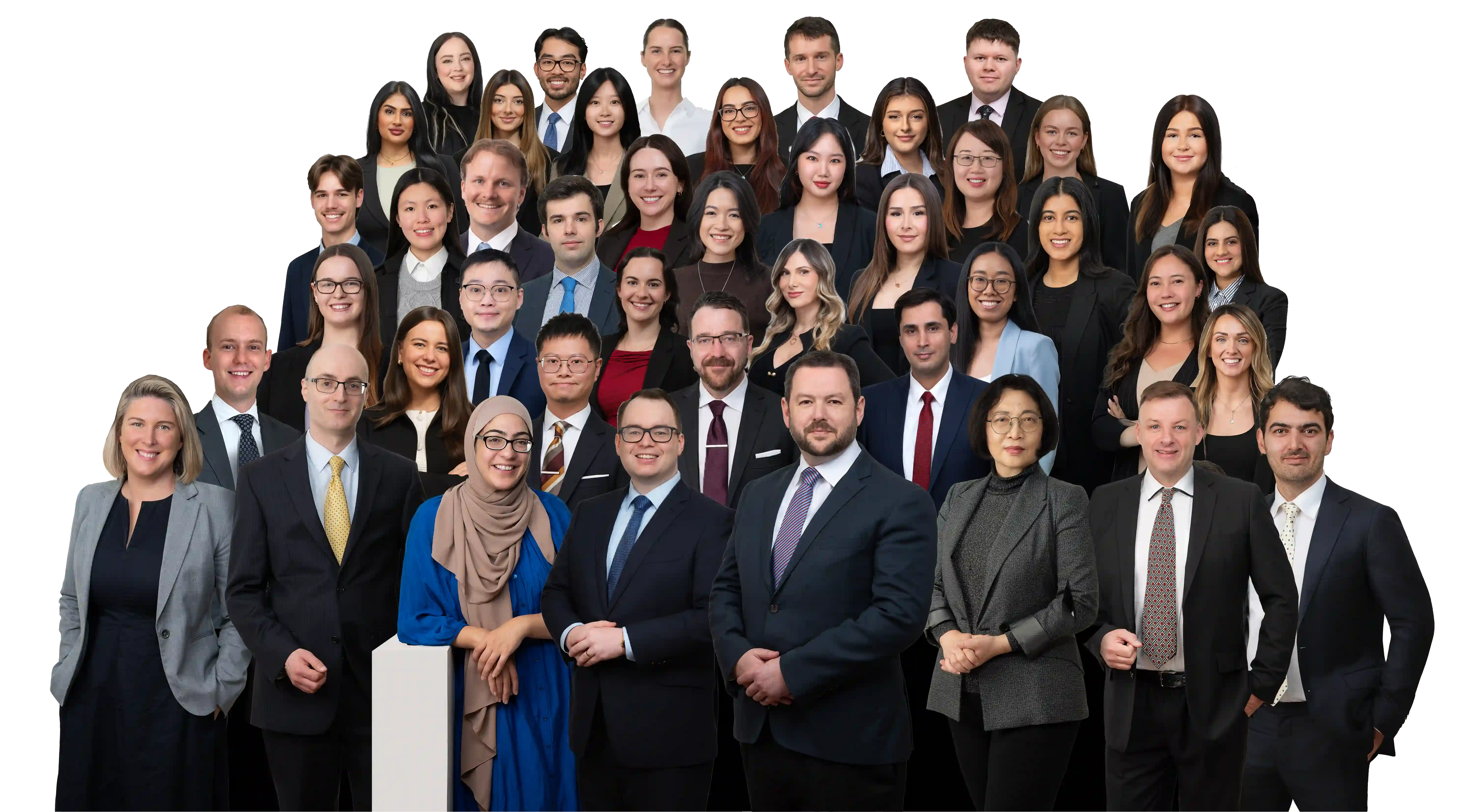
Le plus grand cabinet d'avocats indépendant spécialisé en droit de l'immigration d'Australie. Bénéficiez d'une consultation GRATUITE. Sous réserve des conditions générales.
Besoin d'aide ? Nous sommes disponibles 7 jours sur 7.


Faites-nous part de votre situation et nos avocats spécialisés en droit de l'immigration vous contacteront dans les plus brefs délais.
Faites-nous part de votre situation et nos avocats spécialisés en droit de l'immigration vous contacteront dans les plus brefs délais.


Nominé aux Telstra Best of Business Awards 2026



Lauréat du prix du cabinet d'avocats australien le plus fiable en matière de droit de l'immigration 2023-2026

Classé 1er pour le droit des migrations en 2023, 2024 & 2025

Classé parmi les meilleurs avocats spécialisés en droit de l'immigration en 2023, 2024, 2025 et 2026

Classé meilleur cabinet d'avocats en matière de migration 2024 & 2025


Des dossiers prêts à être soumis, préparés par des avocats.
Options « Sans Visa, sans frais » disponibles.*
Première consultation gratuite (sous réserve des conditions générales).
Points clés à retenir
The Visitor Visa (Subclass 600) is a temporary visa that allows people to travel to Australia for tourism, to visit family, or for short-term business purposes. The Student Visa (Subclass 500) is a separate visa that allows international students to live and study full-time at a registered educational institution in Australia for the duration of their enrolled course. These two visas serve entirely different purposes, and the rules governing who can apply for a Student Visa, and from where, have changed significantly. For anyone who has arrived in Australia on a Visitor Visa and is now considering studying, the onshore pathway has been closed since 1 July 2024.
[consultation libre]
Si vous souhaitez obtenir plus d'informations sur un visa, prenez contact avec Australian Migration Lawyers pour une consultation.
[/free_consultation]
Prior to 1 July 2024, certain Visitor Visa holders were able to apply for a Student Visa while remaining in Australia. This pathway attracted a significant volume of applications, with over 36,000 lodged through the visitor-to-student route between 1 July 2023 and May 2024, according to the Department of Home Affairs. The Government identified this as a pattern of visa hopping, where individuals were using the visitor pathway to extend their time in Australia rather than applying for a student visa through the correct offshore process.
From 1 July 2024, the Department of Home Affairs expanded Legislative Instrument IMMI 16/016 through LIN 24/051 to include the Subclass 600 (Visitor) visa in the list of visa types from which a valid Student Visa application cannot be made while onshore. Any Student Visa (Subclass 500) application lodged onshore by a Visitor Visa holder on or after 1 July 2024 is invalid. The Department of Home Affairs will not assess it.
The visas affected by the 1 July 2024 changes, in addition to those already restricted, include the Subclass 485 (Temporary Graduate), the Subclass 600 (Visitor), the Subclass 601 (Electronic Travel Authority), the Subclass 602 (Medical Treatment), the Subclass 651 (eVisitor), and the Subclass 988 (Maritime Crew). Holders of the Working Holiday Maker Visa (Subclass 417) and the Work and Holiday Visa (Subclass 462) are not affected by these changes and may still apply for a Student Visa onshore.
Even before the 1 July 2024 changes, a large number of Visitor Visa holders were already prevented from applying for a Student Visa onshore by Condition 8503, known as the No Further Stay condition.
Condition 8503 prevents the holder from applying for any substantive visa while remaining in Australia, with the exception of the Protection Visa (Subclass 866). It is applied to Visitor Visas in certain circumstances, including where the applicant has not sufficiently demonstrated ties to their home country, such as through employment, family connections, or property ownership. Applicants can check whether Condition 8503 applies to their visa by logging into the Visa Entitlement Verification Online (VEVO) system on the Department of Home Affairs website.
If the condition appears on a visa, the holder cannot apply for a Student Visa or any other substantive visa while in Australia. Following the 1 July 2024 rule change, Condition 8503 is no longer the only barrier, since all Visitor Visa holders are now prevented from applying for a Student Visa onshore regardless of whether the condition applies to their individual visa.
A Visitor Visa holder arriving in Australia to travel or visit is permitted to undertake incidental study of up to three months as part of their stay, as confirmed by the Department of Home Affairs. Study intended to last longer than three months requires a Student Visa applied for from outside Australia.
Visitor Visa holders do not have work rights in Australia. The Student Visa (Subclass 500), by contrast, allows the holder to work up to 48 hours per fortnight during study periods and unlimited hours during scheduled course breaks, subject to any conditions attached to the visa.
The correct pathway for a Visitor Visa holder who wishes to study in Australia is to apply for the Student Visa (Subclass 500) from outside Australia. This requires the applicant to depart Australia before lodging the application. The Student Visa must be applied for and granted while the applicant is offshore. A Bridging Visa is not available to offshore Student Visa applicants waiting for a decision, which means the applicant must hold a valid visa permitting their stay in whichever country they are in while the application is processed.
As part of the Student Visa application, all applicants must satisfy the Genuine Student requirement, which replaced the previous Genuine Temporary Entrant requirement for applications lodged on or after 23 March 2024. Under the Genuine Student requirement, applicants are required to answer targeted questions about their reasons for studying in Australia, their study plans and course progression, and their personal circumstances. The Department of Home Affairs assesses these responses as part of the overall eligibility assessment.
The government application charge for the Student Visa (Subclass 500) is $2,500 for the main applicant under the standard stream, effective 1 July 2026. A lower charge of $2,050 applies to applicants in the English Language Intensive Courses for Overseas Students (ELICOS) and certain non-award streams, also effective 1 July 2026.
[aml_difference][/aml_difference]
Where Condition 8503 applies to a Visitor Visa, a waiver of the condition may be requested. The legal test is set out in Regulation 2.05(4) of the Migration Regulations 1994, which requires the applicant to demonstrate that compelling and compassionate circumstances arose after the visa was granted, resulted in a major change to the applicant’s circumstances, and were beyond the applicant’s control. Circumstances that existed before the visa was granted, or that arose from choices the applicant made, will generally not satisfy this test.
The waiver request is submitted primarily through the online form on the Department of Home Affairs website. For those who cannot apply online, Form 1447 (No Further Stay Waiver Request) is also available and can be submitted by email or post to the No Further Stay Waiver Processing Centre. According to the Department of Home Affairs, processing times are generally up to 28 days, though this may be longer if further information is requested.
A waiver of Condition 8503, if granted, does not in itself allow a Visitor Visa holder to apply for a Student Visa. Under the separate 1 July 2024 legislative change, Visitor Visa holders remain unable to lodge a valid Student Visa application onshore regardless of whether Condition 8503 has been waived. A decision to refuse a waiver of Condition 8503 cannot be reviewed by the Administrative Review Tribunal (ART).
[success_stories] [/success_stories]
Determining whether your visa conditions prevent you from applying for a Student Visa, and understanding the correct offshore process, can be more complex than it first appears, particularly where Condition 8503 is involved or where individual circumstances require assessment. At Australian Migration Lawyers, our migration lawyers can review your current visa, identify what conditions apply, and advise on the most appropriate pathway for your situation.
Call 1300 150 745 or book a consultation online to speak with one of our migration lawyers about your student visa options.
Fort de 15 ans d'expérience dans le droit américain et l'administration publique, suivis de 5 ans d'exercice du droit australien de l'immigration, Nick apporte à son activité d'avocat spécialisé en droit de l'immigration australien une expertise juridique approfondie couvrant plusieurs juridictions.
Nick est titulaire d'une licence en sciences politiques de l'université d'État de Floride (2000), d'un doctorat en droit de la faculté de droit de l'université St. Thomas (2004) et d'une maîtrise en administration publique de l'université d'État de Floride (2007). Il est membre du barreau de Floride depuis 2006 et du barreau de la cour d'appel du district de Columbia depuis 2007. Il s'est forgé une brillante carrière juridique internationale avant de s'installer à Melbourne en 2021.
Après avoir terminé ses études de droit en Australie à l'université La Trobe et au College of Law, il a été admis au barreau de l'Australie par la Cour suprême de Victoria en 2022. Il a ensuite obtenu le numéro d'avocat 5513285, grâce auquel il exerce dans le domaine du droit de l'immigration. Il est membre du Law Institute of Victoria.
Nick apporte des conseils d'expert sur un large éventail de questions liées à l'immigration. Ayant lui-même vécu ce processus, il allie une expertise professionnelle à une compréhension authentique de ce que vivent ses clients tout au long de cette démarche.
Nick accompagne des clients dans tout le pays, notamment à Melbourne, Sydney, Brisbane, Perth et Adélaïde, en leur apportant un soutien complet.
Il a représenté des clients dans le cadre de procédures devant le Tribunal de contrôle administratif (ART), mettant ainsi à profit son expérience en matière de plaidoirie devant ce tribunal pour traiter des dossiers complexes et contestés liés à l'immigration.
En dehors de sa vie professionnelle, Nick aime lire, voyager et découvrir la culture du café à Melbourne.
AVERTISSEMENT JURIDIQUE : Les articles et billets de blog publiés par Australian Migration Lawyers fournissent uniquement des informations d’ordre général et ne constituent en aucun cas des conseils juridiques ou en matière d’immigration. La lecture de ce contenu n’entraîne pas la création d’une relation avocat-client, et toute décision prise sur la base de ces informations relève strictement de votre propre responsabilité. Les lois en matière d’immigration évoluant fréquemment, veuillez consulter un avocat australien agréé afin d’obtenir des conseils professionnels adaptés à votre situation particulière avant de prendre toute décision ou de déposer toute demande en matière d’immigration.
Faites-nous part de votre situation et nous vous répondrons dans les plus brefs délais.
Faites-nous part de votre situation et nous vous répondrons dans les plus brefs délais.
Des outils rapides et gratuits pour vous aider à cerner vos options avant de consulter un avocat spécialisé en droit de l'immigration : estimez le coût de votre visa ou vérifiez votre score pour l'obtention du statut de résident permanent.

Estimer les frais facturés par le ministère de l'Intérieur pour les visas parrainés par un employeur — nomination et visa « Skills in Demand » (sous-catégorie 482) ou « Employer Nomination Scheme » (sous-catégorie 186) —, y compris les frais de nomination, la contribution SAF et les personnes à charge.
Commencer
Estimez le montant des frais de dossier pour une demande de visa relevant des sous-catégories 189, 190 ou 491 auprès du ministère de l'Intérieur — en incluant tout conjoint ou enfant faisant la demande avec vous.
Commencer
Découvrez où se situe votre score par rapport au seuil minimum de 65 points requis pour les visas des sous-catégories 189, 190 et 491, en fonction de votre âge, de votre niveau d'anglais, de votre expérience professionnelle et d'autres critères.
CommencerDécrivez-nous votre situation et l'un de nos avocats spécialisés dans les questions de migration vous contactera dans les plus brefs délais.