Besoin d'aide ? Nous sommes à votre disposition 7 jours sur 7Lire lasuite

Australia's largest independent migration law firm. Get a FREE Consultation T&C's apply

Besoin d'aide ? Nos juristes et agents de migration sont disponibles 7 jours sur 7 pour vous aider.

Symbole de la croix
Ouvert 7 jours
Icône de smartphone
1300 150 745

Migration Court Review Lawyers Brisbane

Judicial Review of Migration Decisions in Brisbane Courts

If your visa or migration matter has been refused by the Administrative Review Tribunal (ART), you may still have legal options through a migration court review. Our Brisbane migration court review lawyers provide expert advice on whether a tribunal decision contains a legal error and whether it can be challenged in court. We help prepare judicial review applications, legal arguments, and court representation to make sure your case is properly presented before the Federal Circuit and Family Court of Australia (FCFCOA) or the Federal Court.

Classé parmi les « Best Lawyers » dans la catégorie «
» en 2026 et 2027

Lauréat des « Australian Law Awards » organisés par l'

Classement des meilleurs cabinets d'
s juridiques en Australie 2027

Classé dans le guide «
» de Doyle parmi les meilleurs avocats spécialisés en droit de l’
, 2023-2026

Graphique de l'icône du chat

Demandez votre consultation

Faites-nous part de votre situation et nous vous répondrons dans les plus brefs délais.

Exemplaire d'avis de non-responsabilité

Nous vous remercions ! Votre demande a bien été reçue !
Oups ! Un problème s'est produit lors de l'envoi du formulaire.
Graphique de l'icône du chat

Demandez votre consultation

Faites-nous part de votre situation et nous vous répondrons dans les plus brefs délais.

Exemplaire d'avis de non-responsabilité

Nous vous remercions ! Votre demande a bien été reçue !
Oups ! Un problème s'est produit lors de l'envoi du formulaire.

What Is a Migration Court Review?

A migration court review is a legal process where a court examines whether a migration decision was made according to law. Unlike an appeal, the court doesn't reassess the facts of your visa case, and instead focuses on whether a legal error occurred during the decision-making process.

Difference between ART appeals and court reviews
An ART appeal involves a full merits review, where the Tribunal reassesses the facts and the evidence. A court review, by contrast, considers only whether the Tribunal or decision-maker made a legal or procedural error, and this distinction (merits review versus judicial review) matters a great deal in deciding which pathway applies to your case.
Role of the Federal Circuit and Family Court of Australia
The FCFCOA, and in some cases the Federal Court, reviews migration decisions to determine whether a jurisdictional error or other legal mistake occurred. These courts don't substitute their own decision but may set aside an unlawful decision.
Legal grounds required for judicial review
You need to establish that a legal error occurred, such as a breach of procedural fairness, a misinterpretation of the law, or a failure to properly consider relevant evidence.

When Can You Apply for a Migration Court Review?

After an unsuccessful ART appeal

You may apply for a court review if your ART appeal was unsuccessful and you believe the Tribunal made a legal error in its decision.

When there is a legal error in the tribunal decision

Court review is only available where the decision involves a jurisdictional or legal error, not simply because you disagree with the outcome.

When procedural fairness was denied

If you weren't given a fair opportunity to present your case, respond to adverse information, or receive proper notice, you may have grounds for review.

Courts That Handle Migration Judicial Reviews

Federal Circuit and Family Court of Australia (Migration Division)

This court handles most migration judicial review applications, generally as the first level of court review for visa matters, and matters filed here are typically case-managed through the Court's Central Migration Docket before being allocated to a judge.

Federal Court of Australia

The Federal Court hears more complex or significant migration matters, including some appeals from the FCFCOA in certain circumstances.

High Court of Australia (special leave applications)

In rare cases, a migration matter may proceed to the High Court, but only where special leave is granted because of an important legal question, such as a genuinely novel point of statutory interpretation.

Migration Court Review Legal Assistance in Brisbane

Reviewing tribunal decisions for legal errors

We carry out a detailed review of your ART decision, including the written reasons, the hearing transcript where available, and supporting case materials. The focus is on identifying whether the Tribunal made a jurisdictional error, failed to apply the law correctly, overlooked relevant evidence, or relied on an irrelevant consideration. This step matters, since migration court reviews are strictly limited to legal errors rather than a re-hearing of the facts.

Preparing court applications and legal arguments

If legal grounds exist, we prepare and lodge the necessary court documents within strict filing deadlines, including drafting the judicial review application, setting out the specific legal grounds relied on, and preparing supporting affidavits and evidence. We also build structured legal submissions referencing the relevant migration law and case authorities to show how and why the Tribunal's decision should be challenged.

Representation during court hearings

We provide full representation throughout FCFCOA or Federal Court proceedings, including appearing at directions hearings, interlocutory applications, and final hearings. We present oral arguments on your behalf, respond to the Department's submissions, and address any questions raised by the judge, making sure your case is clearly and persuasively presented.

Strategic advice for complex immigration litigation

We provide honest, practical advice on the strengths and weaknesses of your case, including a realistic assessment of your prospects in court. Where appropriate, we also advise on alternative migration pathways available if court action isn't viable or successful, including reapplication options, alternative visa subclasses, or other legal remedies depending on your circumstances and immigration history.

La différence entre les avocats australiens spécialisés dans les questions de migration

Meet With Our Brisbane Migration Court Review Lawyers

At your first meeting, you'll speak directly with a migration lawyer, who will explain how our services work, discuss your options, and guide you through the process. You'll also be given a fixed, upfront fee for ongoing work. Having a clear picture of your options and a structured plan matters when pursuing a visa, permanent residency, or citizenship. We offer flexible payment options, and alongside friendly, in-person support, online appointments are available for your convenience.

Visit us icon

Visit us (by appointment)

Niveau 4/260 Queen Street, Brisbane QLD 4000

Icône du téléphone

Téléphone

Call us on 1300 207 442

Office hours icon

Heures de permanence

Monday – Friday: 9am – 6pm

Saturday – Sunday: 9am – 1pm

Parking icon

Parking

Parking sécurisé au Queen St Car Park (8 minutes à pied)

Payment options icon

Options de paiement

Bank transfer, credit card (Mastercard, VISA, or AMEX), 3-6 monthly instalments available in some cases

Visa Services from Trusted Brisbane Migration Lawyers

50 ans et plus

années d'expérience combinée

Taux de réussite de 100

pour les visas de partenaire destinés aux relations conjugales authentiques et durables

Expérimenté

avocats et agents spécialisés en droit de l'immigration représentant leurs clients devant les tribunaux administratifs et les cours de justice

Primé

cabinet d'avocats, reconnu comme l'un des principaux avocats et agents en matière d'immigration

Nos réussites à Brisbane

Implantations régionales

Trouvez votre destination :

Services d'experts en droit des migrations dans toute l'Australie

Notre expertise juridique en matière de droit de l'immigration va bien au-delà de l'assistance aux clients des capitales australiennes. Nous apportons un soutien complet aux personnes, aux familles et aux entreprises dans de nombreux endroits du pays.

ou

Migration Court Review Process

1

Reviewing the ART decision for legal errors

We carefully examine the Tribunal's decision to identify any jurisdictional or procedural error that might support a court challenge.

2

Filing a judicial review application in court

If grounds exist, we prepare and lodge the necessary court documents within strict legal time limits, generally 35 days from the date of the decision under Section 477 of the Migration Act 1958.

3

Preparing legal submissions and evidence

We draft detailed legal arguments setting out the errors made in the decision, supported by relevant case law.

4

Court hearings and legal arguments

We represent you in court, presenting arguments and responding to the Department's submissions.

5

Court judgment and possible outcomes

The court may set aside the decision, send the matter back for reconsideration, or dismiss the application.

Legal Grounds for Judicial Review

Jurisdictional error by the tribunal

A jurisdictional error happens when the ART exceeds its legal authority or fails to properly exercise its power under migration law. This can include applying the wrong legal test, misunderstanding the scope of its own decision-making power, or making a finding that isn't legally open on the evidence. Where a jurisdictional error is established, the court may set aside the decision as legally invalid.

Denial of procedural fairness

Procedural fairness, also known as natural justice, requires that you're given a fair and reasonable opportunity to present your case and respond to adverse information before a decision is made. A denial can occur if you weren't properly notified of issues affecting your case, weren't given access to adverse material, or weren't given a meaningful chance to respond. Courts take procedural fairness seriously, and a breach can form strong grounds for judicial review. In rarer cases, a claim of apprehended bias, where a fair-minded observer might reasonably think the decision-maker wasn't impartial, can also support a review application.

Failure to consider relevant evidence

A Tribunal decision may be legally flawed if it fails to properly consider evidence that's relevant and material to the outcome. This doesn't mean the Tribunal has to accept every piece of evidence, but it must genuinely engage with key documents, testimony, or country information that could reasonably affect the decision. Overlooking significant evidence can amount to a legal error.

Incorrect interpretation of the migration law

This ground arises where the Tribunal misapplies, misunderstands, or incorrectly interprets a provision of the Migration Act or its regulations, such as applying the wrong legal threshold or incorrectly assessing eligibility criteria. Where the legal framework is applied incorrectly in a way that affects the outcome, the decision may be open to judicial review.
Examen par le tribunal des affaires d'immigration

Important Deadlines for Migration Court Reviews

Strict time limits apply to migration court review applications. For most matters, an application must generally be filed within 35 days of the date of the decision, under Section 477 of the Migration Act 1958. The court has a discretion to extend this period where it's in the interests of justice to do so, but an extension isn't guaranteed and generally requires a genuine explanation for the delay. Missing the deadline can severely limit your legal options, so it's important to seek advice as early as possible.

Documents Required for a Migration Court Review

ART decision and tribunal records

The written decision and related Tribunal documents are essential for identifying a legal error.

Migration application history

This includes your visa applications, refusals, and appeal records.

Supporting legal documentation

Any evidence relevant to procedural fairness or a legal error should be provided.

Written legal arguments and affidavits

These documents form the basis of your court case and set out the grounds for review.

Possible Outcomes of a Migration Court Review

Court sets aside the tribunal decision

If the court finds that a jurisdictional or legal error occurred, it may set aside (quash) the Tribunal's decision, sometimes granted through the remedy of certiorari, meaning the original decision is legally invalid and no longer stands. This can reopen your migration matter, requiring it to be reconsidered, though the court itself doesn't usually grant a visa — its role is to correct legal errors in the decision-making process.

Court sends the case back for reconsideration

Where a decision is set aside, the court will often remit the matter back to the ART or the original decision-maker for reconsideration, sometimes through an order in the nature of mandamus directing the decision-maker to properly perform their duty. This means your case is decided again, this time in line with the law as clarified by the court. The outcome isn't guaranteed, but the decision must be made again free from the legal error identified.

Court dismisses the application

If the court finds that no jurisdictional or legal error has been proven, the application is dismissed, and the original Tribunal decision remains in effect. This outcome means the court is satisfied the decision was made lawfully, even if the result is unfavourable, and in most cases this brings the judicial review process to an end, subject to any further limited appeal rights.

Risks and Considerations in Migration Court Litigation

Legal costs and court fees

Court proceedings can involve significant legal and filing costs, depending on complexity.

Risk of losing the case

If unsuccessful, you may need to comply with the original visa refusal outcome.

Importance of strong legal grounds

Court reviews only succeed where a clear legal error can be demonstrated.

L'équipe de juristes spécialisés dans les questions de migration en Australie

Costs Involved in a Migration Court Review

Federal court filing fees

Effective from 1 July 2026, filing a migration application with the FCFCOA costs AUD $4,180, with a reduced fee of AUD $2,090 available where a Registrar or authorised officer determines you're eligible. Once a matter is set down for hearing, a setting-down fee of AUD $1,035 applies (individuals) or AUD $2,495 (corporations), and a daily hearing fee of the same amount applies for each hearing day after the first. A reduced fee may also apply on financial hardship or concession-card grounds.

Legal representation and litigation costs

Costs vary depending on case complexity and the level of court involvement.

Additional legal preparation expenses

These may include document preparation, affidavits, and expert legal submissions.

Why Choose Our Brisbane Migration Court Review Lawyers

We provide experienced legal representation in migration litigation matters, including judicial review applications before the FCFCOA and, where relevant, the Federal Court. Our approach focuses on identifying legal errors, building strong arguments, and guiding clients through complex court processes. We offer clear advice on your prospects, the risks involved, and alternative visa pathways where appropriate.

Examen par le tribunal des affaires d'immigration

FCFCOA Brisbane Registry

Migration matters for Brisbane and Queensland are generally heard at the Harry Gibbs Commonwealth Law Courts, 119 North Quay (corner of Tank Street), Brisbane QLD 4000. This is the Court's own registry, not an Australian Migration Lawyers office. Our Brisbane migration lawyers can represent you in proceedings at this registry, including filing, directions hearings, and final hearings.

Avocats spécialisés en droit de l'immigration primés à Brisbane

Notre bureau de Brisbane met son expertise en droit de l'immigration, reconnue à l'échelle nationale, directement au service de nos clients de Brisbane et du Queensland. Chaque distinction mentionnée ci-dessous a été obtenue à l'issue d'une évaluation indépendante, comprenant notamment des évaluations par des pairs, des retours d'expérience de clients et des audits en milieu de travail. Lorsque vous faites appel à nos avocats spécialisés en droit de l'immigration à Brisbane, vous collaborez avec un cabinet dont la qualité a été validée par des organismes externes.

2027
|
Les meilleurs avocats
Best Lawyers in Australia™ - Droit de l'immigration

Perry Q. Wood figure dans l'édition 2027 du Best Lawyers in Australia™ dans la catégorie « Droit de l'immigration ». Ce classement est établi exclusivement sur la base d'une évaluation confidentielle par des pairs, à savoir des avocats chevronnés exerçant dans le même domaine. Il s'agit de la référence mondiale en matière de répertoires juridiques.

En savoir plus
2027
|
Les meilleurs avocats
Les meilleurs cabinets d'avocats d'Australie

Le cabinet Australian Migration Lawyers figure dans le classement « 2027 Best Law Firms – Édition Australie » établi par Best Lawyers. Le classement des cabinets est déterminé à partir des avis des clients, des nominations par les pairs et de la réputation globale sur le marché. Cette distinction confirme que le cabinet fournit des services juridiques de premier ordre en droit de l'immigration à l'échelle nationale.

En savoir plus
2026
|
Le guide de Doyle
Spécialiste du droit de l'immigration

Perry Q. Wood figure parmi les meilleurs avocats spécialisés en droit de l'immigration à Victoria dans le Doyle's Guide 2026. Sa présence dans ce guide pendant quatre années consécutives témoigne d'un parcours d'excellence avéré et durable, ainsi que de la reconnaissance de ses pairs dans le domaine du droit de l'immigration australien.

En savoir plus

Costs involved when applying for an Australian visa in Brisbane

The government costs vary for each visa type, and you also need to factor in the cost of living while you await the outcome of your visa application. Consulting a reliable Brisbane immigration lawyer can clarify details relating to specific visas and guide you on professional fees, Department of Home Affairs fees and other associated costs.

Consultation des livres

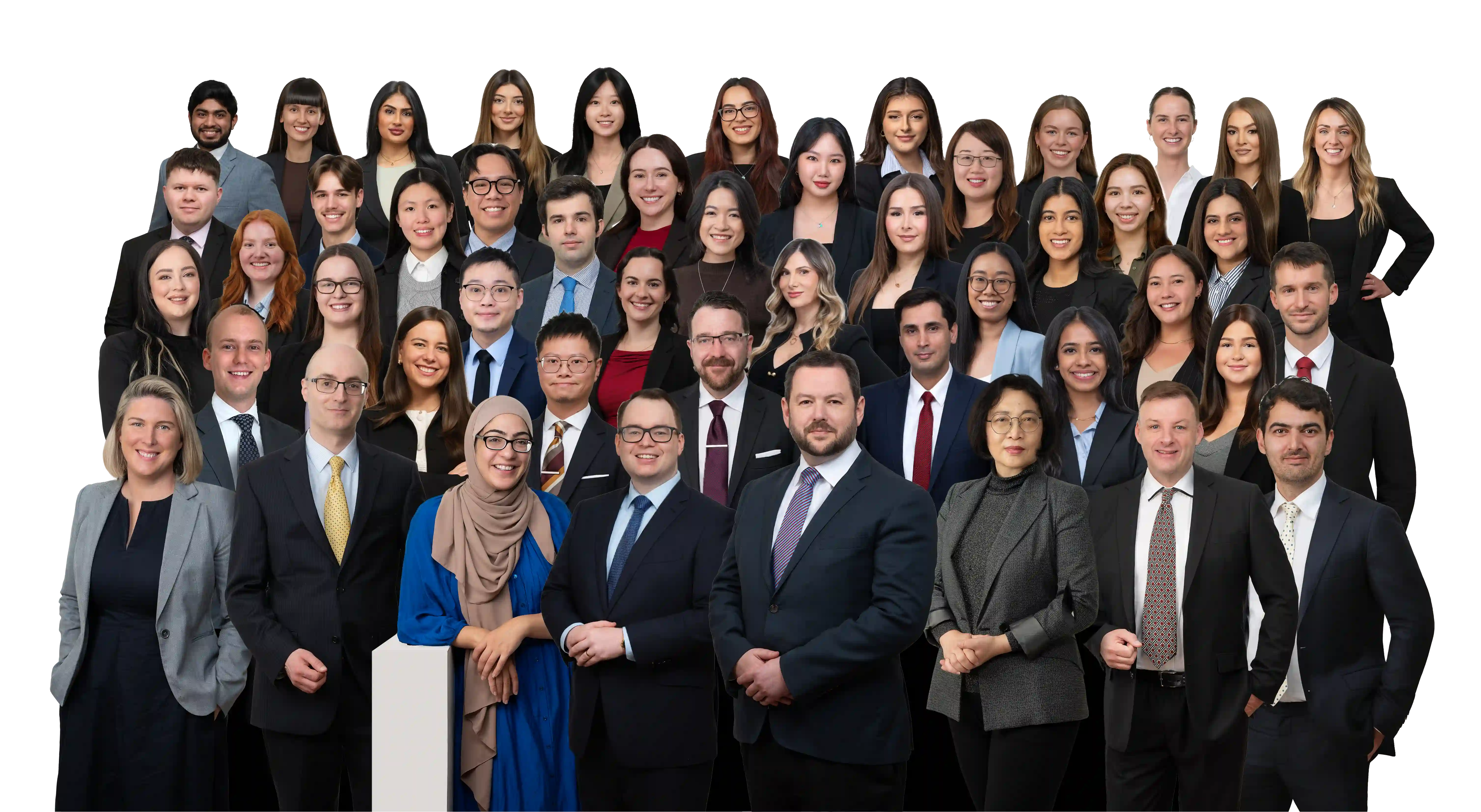
Découvrez notre équipe d'experts à Brisbane

Nos avocats spécialisés en droit de l'immigration à Brisbane sont à votre disposition pour vous recevoir sur rendez-vous 7 jours sur 7 dans nos locaux de Brisbane. Lorsque vous faites appel à nos services, vous serez en contact direct avec un avocat, de la première consultation jusqu'à la conclusion de votre dossier.
Neil Williams Headshot
portrait de Joshua Coulson

Histoire de l'immigration à Brisbane

L'histoire de l'immigration à Brisbane remonte au milieu du XIXe siècle, lorsque des colons libres et des immigrants subventionnés venus de Grande-Bretagne et d'Irlande ont fondé le Queensland en tant que colonie distincte. L'après-guerre a vu arriver d'importantes vagues d'immigrants en provenance d'Italie, de Grèce et d'Europe de l'Est, dont beaucoup se sont installés dans les banlieues proches de Brisbane et ont contribué à l'essor économique de la ville.En savoir plus

À partir des années 1970, l'abandon de la « politique de l'Australie blanche » a ouvert Brisbane à l'immigration en provenance d'Asie, du Pacifique et du Moyen-Orient. Aujourd'hui, Brisbane est l'une des villes australiennes qui connaît la plus forte croissance, avec une population immigrée diversifiée et en pleine expansion qui continue de façonner sa culture, sa main-d'œuvre et ses communautés à l'approche des Jeux Olympiques de 2032. Lire moins

L'histoire de l'immigration à Brisbane remonte au milieu du XIXe siècle, lorsque des colons libres et des immigrants subventionnés venus de Grande-Bretagne et d'Irlande ont fondé le Queensland en tant que colonie distincte. L'après-guerre a vu arriver d'importantes vagues d'immigrants en provenance d'Italie, de Grèce et d'Europe de l'Est, dont beaucoup se sont installés dans les banlieues proches de Brisbane et ont contribué à l'essor économique de la ville.

À partir des années 1970, l'abandon de la « politique de l'Australie blanche » a ouvert Brisbane à l'immigration en provenance d'Asie, du Pacifique et du Moyen-Orient. Aujourd'hui, Brisbane est l'une des villes australiennes qui connaît la plus forte croissance, avec une population immigrée diversifiée et en pleine expansion qui continue de façonner sa culture, sa main-d'œuvre et ses communautés à l'approche des Jeux olympiques de 2032.

Nous avons l'expérience des visas LGBTIQ+ dans toute l'Australie.

FAQs About Migration Court Reviews Brisbane

It's a legal process where a court reviews whether a migration decision involved a legal or procedural error, rather than reassessing the facts of your case as an ART appeal would.

Strict time limits apply, generally 35 days from the date of the decision under Section 477 of the Migration Act, with a limited possibility of an extension where it's in the interests of justice.

Generally, courts focus on legal errors rather than new factual evidence, since a court review isn't a fresh assessment of the facts in the way an ART appeal is.

Timelines vary, but a case can take several months to resolve, depending on complexity and the court's schedule.

A merits review at the ART reassesses the facts and evidence afresh. A court review only considers whether a legal error, such as a jurisdictional error or a breach of procedural fairness, occurred in how the decision was made.

Legal representation is strongly recommended, given the technical nature of migration law and court procedure.

This page provides general legal information, not legal advice, and doesn't take into account your individual circumstances. If your situation is time-sensitive, we'd encourage you to book a consultation with our team as soon as possible to get advice specific to you.

À propos de l'auteur du contenu

Perry Q Wood
Perry Q Wood
Partenaire

Perry Q Wood est le président sortant de l'Institut australien de droit administratif et l'un des principaux avocats australiens spécialisés dans l'administration, l'immigration et les droits de l'homme.

Demandez votre consultation gratuite

Décrivez-nous votre situation et l'un de nos avocats spécialisés dans les questions de migration vous contactera dans les plus brefs délais.