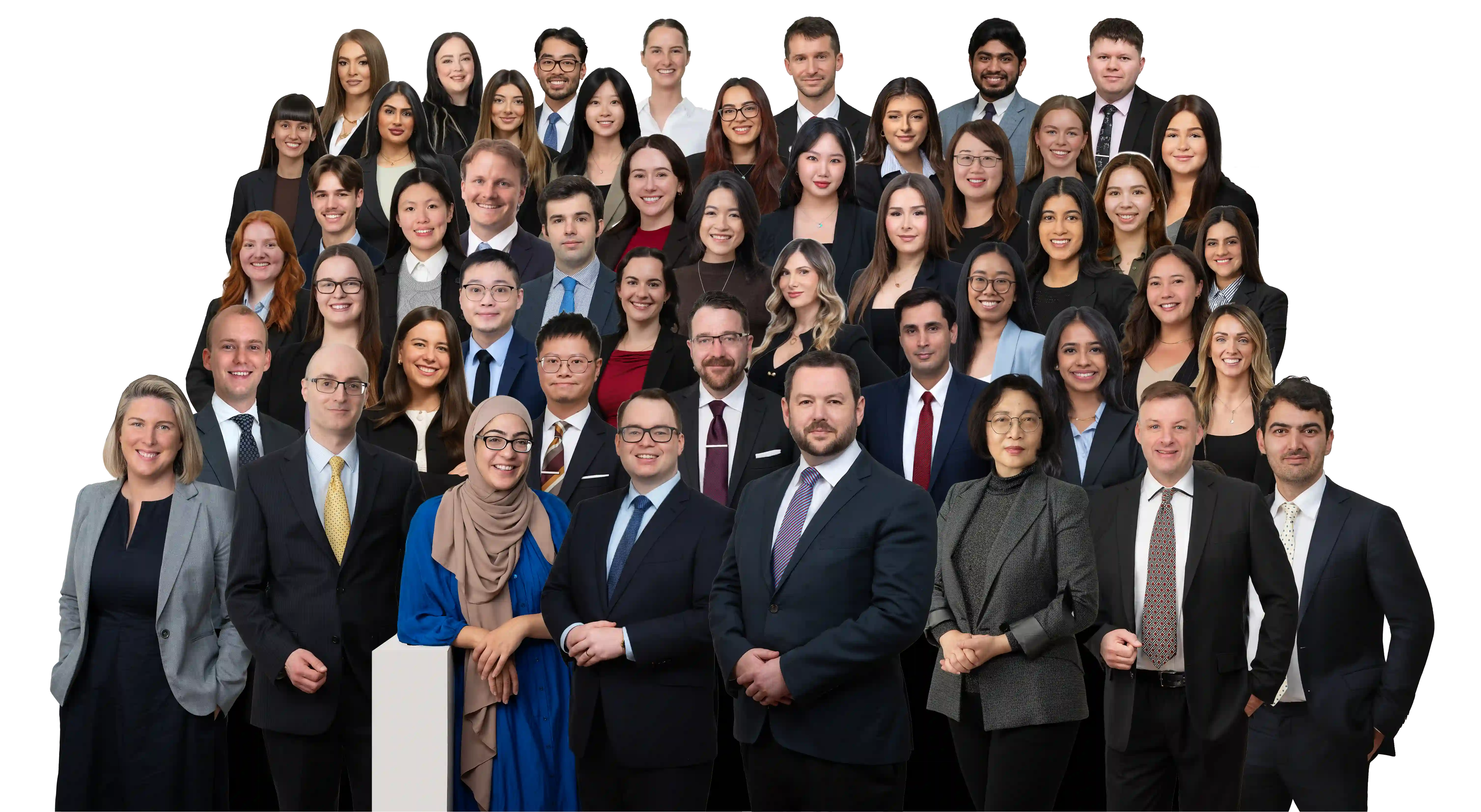
Il più grande studio legale indipendente specializzato in diritto dell'immigrazione in Australia. Richiedi una consulenza GRATUITA. Si applicano i termini e le condizioni.
Avete bisogno di aiuto? Siamo disponibili 7 giorni su 7.


Ci parli della sua situazione e i nostri avvocati specializzati in immigrazione la contatteranno al più presto.
Ci parli della sua situazione e i nostri avvocati specializzati in immigrazione la contatteranno al più presto.


Candidato ai Telstra Best of Business Awards 2026


Vincitore del premio "Studio legale australiano più affidabile in materia di immigrazione" 2023-2026

1° posto per la legge sulla migrazione nel 2023, 2024 e 2025

Classificato tra i migliori avvocati specializzati in diritto dell'immigrazione nel 2023, 2024, 2025 e 2026

Classificato come il miglior studio legale sulla migrazione 2024 e 2025


Documenti pronti per la decisione, redatti da avvocati.
Sono disponibili opzioni "No Visa, No Fee ".*
Prima consulenza gratuita (si applicano i termini e le condizioni).
Punti chiave
The Partner Visa (Subclass 100) is the permanent stage of Australia’s offshore partner visa pathway. It follows the Partner Visa (Subclass 309) and, once granted, gives the holder permanent residency in Australia. Both stages form part of a single combined application lodged at the outset; the Subclass 100 is not a separate application but a continuation of the same file, assessed approximately two years after lodgement.
The Subclass 100 is the offshore equivalent of the onshore permanent partner visa (Subclass 801). It grants the holder the right to live, work, and study in Australia indefinitely, with full access to Medicare and the ability to apply for Australian citizenship after meeting the residency requirements.
The permanent stage is not automatic. The Department of Home Affairs conducts a fresh assessment of the relationship, and the applicant must demonstrate that the relationship remains genuine and ongoing at the time of the permanent decision, not merely that it was genuine when the original application was lodged.
[consulenza gratuita]
Se siete interessati a ottenere maggiori informazioni su un visto, contattate gli avvocati australiani specializzati in migrazione per una consulenza.
[/free_consultation]
Eligibility for the permanent partner visa assessment arises two years after the date the combined application was originally lodged. The two-year period runs from the date of lodgement, not from the date the Subclass 309 temporary visa was granted.
According to the Department of Home Affairs’ Global Visa Processing Times guide, once eligibility is reached, 50% of Subclass 100 applications are processed within 9 months and 90% within 21 months from the date of eligibility.
When eligibility is reached, the Department of Home Affairs will generally notify eligible applicants through ImmiAccount to commence the permanent stage assessment. Applicants should not rely solely on receiving a notification. If the two-year period has passed and no invitation has been received, applicants can initiate the permanent stage assessment themselves through ImmiAccount by selecting “Stage 2 — Permanent Partner Visa Assessment (100, 801).” This is not a new application; it is the workflow for submitting updated information to progress the existing combined application.
No. The government application charge paid at the time of original lodgement covers both the temporary stage and the permanent stage of the partner visa. No additional standard application charge is payable when the permanent assessment commences.
What applicants should plan for at the permanent stage are the incidental costs of updating documents, including renewed police clearances, updated statutory declarations, new relationship evidence, and any translation costs for foreign language documents. These are evidence preparation costs, not a second visa application charge.
The permanent stage is a fresh assessment. The Department of Home Affairs must be satisfied that, at the time of the permanent decision, the relationship between the applicant and the sponsor is genuine and continuing. The same four assessment categories used at the first stage apply again under Regulation 1.15A of the Migration Regulations 1994: the financial aspects of the relationship, the nature of the household, the social aspects of the relationship, and the nature of the commitment.
The evidence supplied must reflect the current state of the relationship, not simply repeat what was provided at lodgement. Two years of additional relationship history should be documented and submitted. This includes updated financial evidence, evidence of continued cohabitation or communication if the couple has been separated, updated statutory declarations from both the applicant and sponsor, and updated witness declarations from friends or family members who can speak to the relationship as it stands now.
A file that mirrors the original application without demonstrating the passage of time and the continuation of the relationship carries real risk. A case officer reviewing the permanent stage file will expect to see evidence that the relationship has continued and developed since the temporary grant.
[aml_difference][/aml_difference]
At the permanent stage, financial evidence should reflect the couple’s financial life as it now stands. This means updated joint account statements or bank records, evidence of shared financial responsibilities such as rent, mortgage, or utilities, and records of financial support between the parties if they have been living separately. Where circumstances have changed since the temporary stage, for example where the applicant has entered the Australian workforce or the couple has made significant joint financial decisions, this should be documented.
Updated evidence of the household is required. Where the couple is living together in Australia, this should include lease agreements, utility bills, or other records showing cohabitation at a shared address. Where the couple has been separated by travel or circumstance during the processing period, evidence of the household during that time, including communications, evidence of shared accommodation during visits, and records demonstrating that the couple has not permanently separated, is relevant.
The social aspects of the relationship at the permanent stage should reflect developments since the temporary grant. This may include evidence of joint attendance at family events, travel together, the couple’s recognition by new social circles in Australia, or updated statements from friends and family who can speak to the relationship as it currently stands. Updated Form 888 statutory declarations from witnesses are valuable at this stage, provided they address the relationship as it has developed rather than simply repeating what was said at the first stage.
Evidence of the couple’s continued and exclusive commitment to a shared future is a key component of the permanent stage assessment. This may include evidence of shared long-term plans, property decisions, family decisions, or other markers of an ongoing partnership. Where the relationship has faced and overcome challenges during the processing period, addressing these directly in the updated statutory declarations strengthens the application.
Changes in circumstances since the temporary stage must be disclosed to the Department of Home Affairs. These include changes of address, changes in family composition such as the birth or adoption of children, changes in the sponsor’s citizenship or residency status, changes in either party’s passport details, and any criminal matters arising since the original application. Failing to disclose changes can raise integrity concerns that complicate or delay the permanent stage assessment.
Where significant changes have occurred, such as a period of separation, the birth of a child, or a change in the sponsor’s circumstances, obtaining legal advice before submitting the permanent stage evidence is prudent. The Department assesses the relationship on the totality of the evidence, and a file that addresses changes directly and honestly is in a stronger position than one that leaves gaps.
If the relationship ends before the Subclass 100 is granted, the applicant may still be eligible in limited circumstances under the Migration Act 1958. These special circumstances include where the applicant has experienced family violence during the relationship, where the applicant and sponsor share a dependent child, or where the sponsor has passed away.
Each of these circumstances has its own legal requirements, and the applicant’s situation will determine what evidence and submissions are needed. Legal advice should be obtained promptly if the relationship has ended or is in difficulty, as the approach taken at this stage can affect the outcome of the permanent assessment.
Once the Subclass 100 partner visa is granted, the holder becomes a permanent resident of Australia. The pathway to Australian citizenship then becomes available, subject to meeting the general residency requirements under the Australian Citizenship Act 2007 (Cth). These include having been lawfully present in Australia for four years immediately before applying, with at least one year as a permanent resident.
Australian citizenship is not mandatory, but it carries benefits beyond those available to permanent residents, including the right to an Australian passport, visa-free or visa-on-arrival access to a significant number of countries, eligibility for government employment, and freedom from ongoing visa compliance obligations.
[success_stories] [/success_stories]
The permanent stage of a partner visa 100 australia application requires updated evidence, proper disclosure of any changes, and a file that clearly demonstrates the relationship has continued since the temporary grant. Applicants who treat the permanent stage assessment as a formality risk delays or, where the evidence is insufficient, refusal.
At Australian Migration Lawyers, our team of migration lawyers assists applicants through the permanent stage of both the Subclass 100 and Subclass 801 partner visa assessments, from reviewing what has changed since the temporary stage through to preparing updated statutory declarations, collating current evidence, and ensuring all changes in circumstances are properly disclosed. We act in accordance with the Migration Act 1958 and our legal obligations to ensure each application is lawfully prepared. We also work with Australian Translation Services to ensure all foreign language documents are translated into Australian English as required.
If you are approaching the two-year mark on your partner visa subclass 100 assessment, or if your permanent stage has become complicated by changes in circumstances, contact Australian Migration Lawyers today. Book a free consultation with one of our qualified migration lawyers to discuss your situation. In-person, video, and telephone consultations are available.
Con 15 anni di esperienza nel diritto statunitense e nella pubblica amministrazione, seguiti da 5 anni di pratica nel campo del diritto dell'immigrazione australiano, Nick apporta una profonda competenza giuridica transgiurisdizionale al suo lavoro di avvocato specializzato in diritto dell'immigrazione australiano.
Nick ha conseguito una laurea in Scienze Politiche presso la Florida State University (2000), un dottorato in Giurisprudenza presso la St. Thomas University School of Law (2004) e un Master in Pubblica Amministrazione presso la Florida State University (2007). È membro dell'Ordine degli Avvocati della Florida dal 2006 e dell'Ordine degli Avvocati della Corte d'Appello del Distretto di Columbia dal 2007, e ha intrapreso una brillante carriera legale internazionale prima di trasferirsi a Melbourne nel 2021.
Dopo aver completato gli studi di giurisprudenza in Australia presso la La Trobe University e il College of Law, nel 2022 è stato ammesso all’albo degli avvocati australiani dalla Corte Suprema dello Stato di Victoria. Successivamente ha ottenuto il numero di iscrizione all’albo degli avvocati 5513285, grazie al quale esercita la professione nel campo del diritto dell’immigrazione. È membro del Law Institute of Victoria.
Nick offre una consulenza specialistica su un'ampia gamma di questioni relative all'immigrazione. Avendo affrontato personalmente il processo di immigrazione, mette a disposizione sia la sua competenza professionale sia una comprensione autentica di ciò che i clienti vivono durante l'intero percorso.
Nick assiste clienti in tutto il Paese, tra cui a Melbourne, Sydney, Brisbane, Perth e Adelaide, fornendo un supporto completo.
Ha rappresentato i propri clienti in procedimenti dinanzi al Tribunale di revisione amministrativa (ART), mettendo a frutto la propria esperienza in materia di patrocinio dinanzi a tale organo in casi complessi e controversi in materia di immigrazione.
Oltre alla sua vita professionale, Nick ama leggere, viaggiare e scoprire la cultura del caffè di Melbourne.
AVVISO LEGALE: Gli articoli e i post del blog pubblicati da Australian Migration Lawyers forniscono esclusivamente informazioni di carattere generale e non costituiscono una consulenza in materia di immigrazione né un parere legale. La lettura di questi contenuti non dà luogo a un rapporto avvocato-cliente e l’eventuale affidamento su di essi è a vostro esclusivo rischio. Poiché le leggi in materia di immigrazione sono soggette a frequenti modifiche, vi invitiamo a consultare un avvocato australiano abilitato per ricevere una consulenza professionale su misura per la vostra situazione specifica prima di prendere qualsiasi decisione o presentare qualsiasi domanda in materia di immigrazione.
Ci parli della sua situazione e la contatteremo al più presto.
Ci parli della sua situazione e la contatteremo al più presto.
Strumenti rapidi e gratuiti per aiutarti a capire quali sono le tue opzioni prima di rivolgerti a un avvocato specializzato in immigrazione: calcola i costi del visto o verifica i tuoi punti per la residenza permanente.

Stima delle spese da versare al Dipartimento degli Affari Interni per i visti sponsorizzati dal datore di lavoro — nomina e visto per la categoria “Skills in Demand” (sottoclasse 482) o per il programma “Employer Nomination Scheme” (sottoclasse 186) — comprese la tassa di nomina, il contributo SAF e i familiari a carico.
Inizia
Calcola il costo della domanda di visto del Ministero degli Affari Interni per le sottoclassi 189, 190 o 491, compresi eventuali partner o figli che presentano domanda insieme a te.
Inizia
Scopri a che livello si colloca il tuo punteggio rispetto al minimo di 65 punti richiesto per i visti delle sottoclassi 189, 190 e 491, in base all’età, alla conoscenza della lingua inglese, all’esperienza lavorativa e ad altri fattori.
IniziaCi parli della sua situazione e uno dei nostri avvocati specializzati in migrazione la contatterà al più presto.











Abbiamo creato guide complete sui visti che illustrano i dettagli delle domande di visto. Richiedete la vostra oggi stesso.