オーストラリア最大の独立系移民法専門法律事務所。無料相談をご利用ください(利用規約が適用されます)。
お困りですか?週7日対応いたします。


あなたの状況をお聞かせください。私どもの移民弁護士が折り返しご連絡いたします。
あなたの状況をお聞かせください。私どもの移民弁護士が折り返しご連絡いたします。


2026年 テルストラ・ベスト・オブ・ビジネス・アワード ノミネート

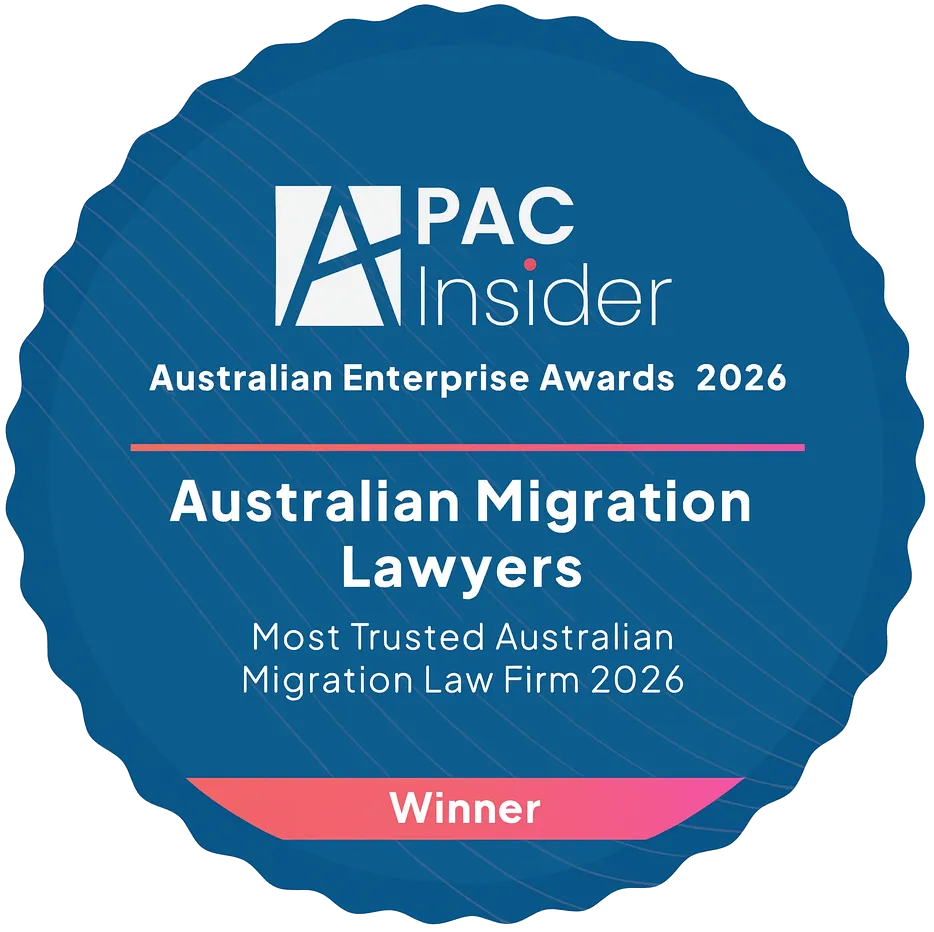
2023-2026年度 最も信頼されるオーストラリア移民法律事務所 受賞

2023年、2024年、2025年の移民法ランキング1位

2023年、2024年、2025年、2026年の移民法専門弁護士ランキングに選出

2024年・2025年 移住に強い法律事務所ランキング

主なポイント
The Partner Visa (Subclass 100) is the permanent stage of Australia’s offshore partner visa pathway. It is assessed as part of the same combined application lodged when the applicant first applied for the Partner Visa (Subclass 309); it is not a fresh application but a continuation of the same file.
Once granted, the subclass 100 partner visa gives the holder permanent residency in Australia, with the right to live, work, and study in Australia indefinitely, full access to Medicare, and the ability to apply for Australian citizenship after meeting the general residency requirements. It is the offshore equivalent of the onshore permanent partner visa (Subclass 801).
[無料相談]
ビザについての詳しい情報をお知りになりたい方は、オーストラリア移民法弁護士にご相談ください。
[/free_consultation]。
The permanent stage is not a formality. The Department of Home Affairs conducts a genuine reassessment of the relationship at this point. What needs to be proved is not just that the relationship was genuine two years ago, but that it remains genuine, ongoing, and exclusive now.
Eligibility for the permanent stage generally arises two years after the date the original combined application was lodged. This is an important distinction: the two-year period runs from the date of lodgement, not from when the Subclass 309 visa was granted.
Once eligibility is reached, the Department of Home Affairs will typically notify applicants through ImmiAccount to commence the permanent stage assessment. If no notification has been received after the two-year period, applicants can initiate the process themselves through ImmiAccount. This does not involve lodging a new application; it is the process for submitting updated information against the existing combined application.
According to the Department of Home Affairs’ Global Visa Processing Times guide, 50% of Subclass 100 applications are decided within 9 months of the eligibility date, and 90% are decided within 21 months. These figures are measured from when eligibility begins, not from original lodgement.
No. The government application charge paid at original lodgement covers both stages of the partner visa. No further standard government fee is payable when the permanent stage assessment commences.
There will, however, be practical costs involved in preparing the updated evidence file, such as renewed police clearances, any document translations required, and costs associated with professional legal assistance. These are evidence preparation costs, not a second application charge.
Many applicants are surprised by the weight of the permanent stage. It is not simply a check that the relationship existed, it is a reassessment of whether the relationship is genuine and continuing at the time of the permanent decision.
The Department of Home Affairs evaluates the relationship across the same four categories used at the first stage: the financial aspects of the relationship, the nature of the household, the social aspects of the relationship, and the nature of the couple’s commitment to one another. Updated evidence covering all four categories is required.
What the permanent stage adds is time. Two years have passed since lodgement, and the Department of Home Affairs expects to see evidence of the relationship as it has developed over that period, not a repeat of the material submitted at the first stage. The specific documents and submissions required depend on the couple’s individual circumstances, and what is sufficient varies considerably from one case to the next.
[aml_difference][/aml_difference]。
The permanent stage assessment accounts for how the couple’s life has developed since the temporary grant, including changes that occurred during the processing period.
Changes in circumstances since the temporary grant must be disclosed to the Department of Home Affairs. This includes changes of address, passport details, family composition, or any criminal matters arising since the original application. Changes in the sponsor’s circumstances, including changes to their citizenship or residency status, must also be reported.
Where circumstances have changed in more complex ways, such as a period of separation, financial changes, or other developments in the relationship, how the evidence file is constructed around those changes can affect the outcome of the permanent assessment. What is straightforward in some circumstances can require careful handling in others.
If the relationship has broken down before the Subclass 100 is granted, the applicant is generally no longer eligible for the permanent visa. There are limited exceptions under the Migration Act 1958, including where the applicant has experienced family violence during the relationship, where the couple shares a dependent child, or where the sponsor has passed away. Each exception has its own legal requirements, and the individual circumstances will determine whether it applies and what evidence is needed.
Once granted, the partner visa 100 gives the holder permanent residency in Australia. As a permanent resident, the holder has full access to Medicare and, in time, the pathway to Australian citizenship becomes available once the general residency requirements under the Australian Citizenship Act 2007 (Cth) are met. These include four years of lawful presence in Australia immediately before applying, with at least one year as a permanent resident.
[成功事例] [/成功事例]
The permanent stage of a Subclass 100 application turns on the specific facts of the relationship as it stands two years after lodgement. What needs to be proved, what the Department of Home Affairs is likely to focus on, and how the evidence file should be structured all depend on circumstances that differ from one couple to the next.
At Australian Migration Lawyers, our team of migration lawyers works with applicants on both the Subclass 100 and Subclass 801 permanent stage assessments. We review the relationship as it stands at the two-year mark, advise on the evidentiary position, and prepare the updated file accordingly. We act in accordance with the Migration Act 1958 and our legal obligations, and we work with Australian Translation Services to ensure all foreign language documents are translated into Australian English as required.
If you are approaching the two-year mark on your partner visa application, or if your permanent stage has become more involved than you expected, contact Australian Migration Lawyers today. Book a free consultation with one of our qualified migration lawyers. In-person, video, and telephone consultations are available.
米国法および行政分野で15年の経験を経て、さらにオーストラリアの移民法分野で5年間実務に携わってきたニックは、オーストラリアの移民弁護士としての業務において、複数の法域にまたがる深い法的専門知識を活かしています。
ニックは、フロリダ州立大学で政治学の学士号(2000年)、セント・トーマス大学ロースクールで法学博士号(2004年)、フロリダ州立大学で行政学修士号(2007年)を取得しています。2006年からフロリダ州弁護士会、2007年からコロンビア特別区控訴裁判所会員。2021年にメルボルンに移転する前は、国際的な弁護士として卓越したキャリアを築いてきた。
ラ・トローブ大学およびザ・カレッジ・オブ・ローでオーストラリアの法学課程を修了した後、2022年にビクトリア州最高裁判所よりオーストラリアの弁護士として登録されました。その後、弁護士登録番号5513285を取得し、移民法分野で活動しています。また、ビクトリア州弁護士協会の会員でもあります。
ニックは、移民に関する幅広い事柄について、専門的なアドバイスを提供しています。自身も実際に移民手続きを経験したことから、専門的な知識に加え、クライアントがその過程でどのような体験をするのかについて、真に理解した立場からサポートを行っています。
ニックは、メルボルン、シドニー、ブリスベン、パース、アデレードをはじめ、全豪各地のクライアントに包括的なサポートを提供しています。
彼は行政審査裁判所(ART)における手続きにおいて依頼人を代理し、その裁判所での弁護経験を活かして、複雑かつ争点のある移民問題に取り組んできた。
仕事以外では、ニックは読書や旅行、そしてメルボルンのコーヒー文化を探求することを楽しんでいます。
法的免責事項: Australian Migration Lawyersが公開する記事およびブログ投稿は、あくまで一般的な情報提供を目的としたものであり、移民に関するアドバイスや法的助言を構成するものではありません。本コンテンツを閲覧しても、弁護士と依頼人の関係が生じることはなく、本コンテンツを信頼して行動する場合は、その責任はすべてご自身に帰属します。移民法は頻繁に変更されるため、移民に関する決定や申請を行う前に、ご自身の具体的な状況に合わせた専門的なアドバイスを得るため、オーストラリアの登録弁護士にご相談ください。
お客様の状況をお聞かせください。
お客様の状況をお聞かせください。
移民弁護士に相談する前に、自分の選択肢を把握するのに役立つ、手軽で無料のツール — ビザの費用を見積もったり、永住権のポイントをチェックしたりできます。

内務省が徴収する、雇用主がスポンサーとなるビザ(需要の高い技能(サブクラス482)の指名およびビザ、または雇用主指名制度(サブクラス186))に関する費用(指名料、SAF賦課金、および扶養家族分を含む)を見積もってください。
はじめに
サブクラス189、190、または491のビザ申請にかかる内務省の申請手数料を見積もってください。これには、一緒に申請するパートナーや子供も含まれます。
はじめにお客様の状況をお聞かせいただければ、移民法専門の弁護士ができるだけ早く折り返しご連絡いたします。

私たちは、ビザ申請の裏表をまとめた包括的なビザガイドを作成しました。今すぐ入手してください。