Le plus grand cabinet d'avocats indépendant spécialisé en droit de l'immigration d'Australie. Bénéficiez d'une consultation GRATUITE. Sous réserve des conditions générales.
Besoin d'aide ? Nous sommes disponibles 7 jours sur 7.


Faites-nous part de votre situation et nos avocats spécialisés en droit de l'immigration vous contacteront dans les plus brefs délais.
Faites-nous part de votre situation et nos avocats spécialisés en droit de l'immigration vous contacteront dans les plus brefs délais.



Nominé aux Telstra Best of Business Awards 2026

Australian ski resorts operate on one of the shortest seasonal cycles in the employer-sponsored visa system. The winter season runs for a matter of months. The roles resorts need most, from ski and snowboard instructors to lift mechanics and snow groomer operators, require genuine expertise that is often difficult to source locally. Yet standard employer-sponsored visas are designed for year-round, full-time employment. The result is a structural mismatch that resort operators need to plan around carefully, and early, before each season.
This page explains the routes available to Australian ski resorts seeking to sponsor overseas workers, including company-specific labour agreements, standard employer sponsorship for year-round roles, the DAMA framework, and seasonal visa options for genuinely short-term positions.
Classé parmi les « Best Lawyers » dans la catégorie «
» en 2026 et 2027

Lauréat des « Australian Law Awards » organisés par l'

Classement des meilleurs cabinets d'
s juridiques en Australie 2027

Classé dans le guide «
» de Doyle parmi les meilleurs avocats spécialisés en droit de l’
, 2023-2026
Faites-nous part de votre situation et nous vous répondrons dans les plus brefs délais.
Faites-nous part de votre situation et nous vous répondrons dans les plus brefs délais.


Il n'y a pas de frais cachés pour nos services. Nos honoraires sont clairement définis dans une convention d'honoraires.

De la première réponse le jour même à l'obtention de votre visa, vous aurez un accès direct à un avocat.

Nos juristes expérimentés vous fourniront des mises à jour régulières et des explications claires sur les voies d'accès aux visas.

Nous offrons une garantie de satisfaction du client en ce qui concerne nos services de demande de visa.

Possibilité de paiement échelonné sur 3 ou 6 mois pour certains types de visas.
| Fonctionnalité | Detail |
|---|---|
| Published Snow Sport Industry Template | No current published industry labour agreement template exists for snow sport. The template that previously existed does not appear in the current official Home Affairs guide or on the official website |
| Primary Route for Specialist Roles | Company-specific labour agreement, with negotiated terms and concessions |
| Standard Sponsorship Option | Subclass 482 Core Skills stream for roles on the CSOL that do not require concessions |
| Regional Option | Subclass 494 Labour Agreement stream for regional resort locations |
| Permanent Pathway | Subclass 186 Labour Agreement stream where included in the agreement, for year-round roles with the required period of continuous employment |
| Seasonal Roles | Working Holiday Maker visas (Subclass 417 and 462) for genuinely seasonal short-term positions; not a substitute for structured ongoing sponsorship |
| DAMA | No DAMA currently covers the major alpine resort regions; confirm current coverage with a migration lawyer |
| Salary Floor | Must meet TSMIT/CSIT ($79,423 from 1 July 2026) and the Australian Market Salary Rate; salary concessions possible in Category 3 locations under a company-specific agreement |
| Relevant Award | Alpine Resorts Award 2020 (MA000092) |
| Timing | Labour agreement requests and nominations must be lodged and approved well ahead of the ski season; last-minute requests are unlikely to succeed |
The straightforward answer is no. The Snow Sport Industry Labour Agreement template was listed in the official Home Affairs Labour Agreement Program Information Guide as recently as 2018 and was confirmed as an active template in parliamentary records as at February 2017. It does not appear in the December 2021 official Home Affairs guide, which is the most current version available from immi.homeaffairs.gov.au, and the dedicated government page for the snow sport template now returns an error. On this basis, no current published template exists.
The Department of Home Affairs currently lists nine industry templates in its December 2021 guide: Dairy, Fishing, On-hire, Meat, Minister of Religion, Pork, Restaurant (Fine Dining), Advertising, and Horticulture. Adding the Aged Care Industry Labour Agreement introduced in 2023, there are ten current templates. Snow sport is not among them.
This does not mean ski resorts cannot access the labour agreement program. It means they cannot rely on a fixed industry template. Resort operators who need to sponsor overseas workers in specialist roles must either use standard employer sponsorship where a suitable occupation is available on the Core Skills Occupation List, or request a company-specific labour agreement directly with the Department of Home Affairs, where the terms are negotiated on a case-by-case basis.
For a broader explanation of how labour agreements work in Australia, see our Labour Agreements page.


The seasonal nature of alpine resort operations is the defining challenge for resort workforce planning under the Australian migration framework.
Standard employer-sponsored visa programs, including the Skills in Demand visa (Subclass 482) and the Skilled Employer Sponsored Regional visa (Subclass 494), are designed for full-time, ongoing employment relationships. A visa granted under these programs provides the sponsored worker with a right to work in Australia for the duration of the visa, typically up to four years for a Subclass 482 or five years for a Subclass 494. The employment must be ongoing and full-time. A genuinely seasonal role, where the worker is employed only for the winter season and the position does not continue year-round, does not satisfy this requirement.
Two distinct planning challenges for resorts
The first is the distinction between genuinely seasonal roles and year-round roles that happen to peak in winter. A lift mechanic employed full-time throughout the year, maintaining equipment in summer and operating it in winter, can be sponsored under standard employer-sponsored arrangements. A ski instructor employed only for the June to October season cannot.
The second is timing. Even where a resort identifies a role that can be structured as ongoing and full-time, the labour agreement process, including stakeholder consultation, submission, departmental assessment, and execution, takes time. Resorts that begin planning after the previous season ends are almost certainly too late. Workforce planning for the following season needs to begin the moment the current one closes.
The right pathway for a resort depends on the nature of the role, whether it is truly year-round or genuinely seasonal, the location of the resort, and whether the occupation is available under the standard visa program.
A company-specific labour agreement is the primary option for a resort that needs to sponsor workers in roles not available under standard occupation lists, or where concessions to standard visa requirements are needed. The terms of the agreement are negotiated with the Department on a case-by-case basis. This route requires a detailed business case, evidence of genuine labour market need, labour market testing, stakeholder consultation, and approval by the Department. It is appropriate for roles that will be structured as ongoing and full-time.
Where a resort role maps to an occupation on the Core Skills Occupation List (CSOL) and the worker meets the standard visa requirements without needing concessions, standard employer sponsorship may be available without a labour agreement. This is the simpler and faster route where it applies. It is most commonly relevant for year-round specialist technical roles such as lift mechanics and snowmaking technicians where a matching ANZSCO occupation exists on the CSOL.
A Designated Area Migration Agreement provides access to additional occupations and concessions for employers in covered regional areas. As at October 2026, no active DAMA covers the major Australian alpine resort areas in Victoria or NSW. Resorts should confirm current DAMA coverage with a migration lawyer, as the DAMA framework evolves.
Working Holiday Maker visas (Subclass 417 for eligible passport holders and Subclass 462 for others) allow overseas visitors to work in Australia for short periods. They are widely used in the ski resort sector for genuinely seasonal roles. Under standard conditions, a single employer can retain a Working Holiday Maker worker for up to six months. They cannot be used to fill skilled roles that require continuity across seasons and do not lead to employer-sponsored permanent residence.
| Route | Best for | Key conditions |
|---|---|---|
| Company-specific labour agreement | Year-round specialist roles needing concessions | Business case, LMT, stakeholder consultation, departmental approval |
| Standard 482/494 sponsorship | CSOL-listed year-round roles, no concessions needed | Full-time ongoing employment, standard visa requirements |
| DAMA | Regional employers in a covered area | DAR endorsement required; no alpine DAMA currently active |
| Working Holiday Maker visa | Genuinely seasonal short-term roles | Up to 6 months with one employer; not for ongoing specialist positions |
The roles resorts typically seek to fill through overseas sponsorship fall into two categories: those that map reasonably well to standard ANZSCO occupations and those that require a labour agreement because no standard occupation adequately reflects the role.
Snowsports instructors are among the most commonly requested roles at Australian resorts. The Alpine Resorts Award 2020 (MA000092) classifies Snowsports Instructors across five levels (Categories A to E), reflecting the industry’s own tiered certification framework. For migration purposes, instructors may map to occupational categories such as Sports Coach (ANZSCO 452312) or Outdoor Recreation Guide (ANZSCO 452316) depending on their duties, or may require a company-specific labour agreement where a standard occupation does not adequately describe the role. Instructor certification from an internationally recognised body affiliated with an ISIA member national association is typically relevant to demonstrating skills.
Lift mechanics and technicians perform year-round maintenance and operation of ski lift infrastructure. This role may map to ANZSCO occupations such as Mechanical Engineer (ANZSCO 233512), Mechanical Engineering Technician (ANZSCO 312512), or a relevant electrical or mechanical trades occupation, depending on the specific duties and qualifications held. Where a CSOL match exists, standard sponsorship may be available. Where the role requires a more specific occupation definition or qualification concession, a company-specific labour agreement may be needed.
Snow groomer operators manage specialised tracked vehicles used to prepare ski runs. This role does not have a direct ANZSCO equivalent. A company-specific labour agreement is typically required, with occupational concessions to reflect that the role requires plant operation certification and alpine terrain experience rather than a standard ANZSCO qualification pathway.
Snowmaking technicians operate and maintain snowmaking equipment across the resort. Like groomer operators, this is a specialised role without a direct ANZSCO match and is likely to require a company-specific labour agreement.
Terrain park specialists and alpine operations supervisors may be eligible under standard sponsorship where their duties align with a listed ANZSCO occupation, or may require a labour agreement depending on the specific role and qualifications. A migration lawyer can confirm which route applies to each position before any application is lodged.
The Subclass 482 Labour Agreement stream provides a temporary work right for up to four years. It is available to resort employers who hold an approved company-specific labour agreement. Workers must be employed on a full-time, ongoing basis.
The Subclass 494 is available for employers in designated regional locations. Most major Australian ski resorts are located in Category 3 regional areas and are likely to qualify on location. The visa is granted for five years and provides a pathway to permanent residence through the Permanent Residence (Skilled Regional) visa (Subclass 191). The labour agreement must include provision for SESR nominations.
Where the resort’s labour agreement includes permanent residence ceilings and the worker has been employed full-time in the nominated occupation for the required period, the Subclass 186 Labour Agreement stream provides a permanent residence pathway. This pathway is suited to year-round roles with genuine long-term employment continuity.
For genuinely seasonal roles, Working Holiday Maker visas remain the most practical option. They allow overseas workers to take up short-term employment at a resort for up to six months with the same employer under standard conditions. They cannot be used to satisfy ongoing sponsorship obligations and do not lead to employer-sponsored permanent residence.
Because the snow sport sector uses company-specific labour agreements rather than a published industry template, concessions are not pre-set. They are negotiated with the Department of Home Affairs on a case-by-case basis and are not guaranteed. A strong business case is required for any concession requested.
Where the standard English requirement cannot be met, resorts in Category 2 or 3 regional locations may request a lower English standard. The business case must demonstrate that the reduced English level does not create a workplace health and safety risk, that workers can still transfer skills to Australians, and that English levels will improve over the life of the agreement. English concessions do not apply to industry registration or licensing requirements.
For Category 3 regional locations, a concession to the standard TSMIT may be requested where a strong business case is provided. No salary concession is available for Category 1 or 2 businesses, as confirmed from the official Home Affairs Labour Agreement Program Information Guide.
Where a role requires specific alpine or industry certification rather than a formal ANZSCO qualification pathway, resorts may request that industry certification be accepted in place of, or alongside, standard qualifications. This is particularly relevant for ski and snowboard instructors, where internationally recognised certification frameworks reflect industry competence. All concession requests must be evidence-based and must not result in overseas workers being employed in conditions less favourable than equivalent Australians.
Company-specific agreements can include custom occupation definitions for roles that do not map cleanly to existing ANZSCO codes, such as snow groomer operators and snowmaking technicians.

The resort must demonstrate a genuine, documented shortage of suitable Australian workers for the specific roles requested. This requires evidence of genuine recruitment attempts, documentation of applications received, reasons why local candidates were not suitable, and broader industry evidence of labour market conditions in the alpine sector.
Labour market testing must be conducted and evidence must accompany each nomination under the labour agreement. Advertising must have national reach, meet the legislative duration and content requirements, and be documented in full.
The resort must be an approved sponsor before nominating any overseas worker. Executing the labour agreement confers approved sponsor status under the Labour Agreement stream.
The resort must be financially viable, evidenced by a statement from a chartered or certified practising accountant, and must have been lawfully and actively operating in Australia for the previous 12 months, as required under the company-specific labour agreement framework confirmed in the official Home Affairs guide.
Before lodging a company-specific labour agreement request, the resort must consult with relevant industry stakeholders, including the relevant industry body, the relevant unions, and any other agencies or community groups affected. Written evidence of consultation and responses must accompany the request. This step takes time and must be planned well in advance of any season deadline.
Sponsored workers must be paid at least the minimum rates required under the Alpine Resorts Award 2020 (MA000092) for their classification, the Australian Market Salary Rate for the role, and the applicable TSMIT or CSIT. All three floors must be met simultaneously. Current Alpine Resorts Award minimum rates should be verified from the Fair Work pay guide at fairwork.gov.au before setting wages, as rates are updated annually.
Many alpine resorts provide on-site accommodation for workers. Where accommodation is provided, deductions from salary may only be made in accordance with the relevant award and applicable workplace laws.
Resort operators must have plans in place to transfer skills to Australian workers and reduce their future reliance on overseas workers over the life of the agreement, as required under the company-specific labour agreement framework.
Instructors must demonstrate skills relevant to the nominated occupation. Where instructor certification is accepted in place of a formal ANZSCO qualification pathway, this must be agreed in the labour agreement terms. Internationally recognised instructor certification from a body affiliated with ISIA member associations is typically used to demonstrate competence. The certification level required will depend on the nominated occupation and the terms of the agreement.
Workers must hold the relevant trade or engineering qualifications for the nominated ANZSCO occupation, or such qualifications as agreed in the labour agreement. Any licensing or registration requirements under state or territory law for the operation or maintenance of alpine lifts must be met. English concessions under a labour agreement do not apply to licensing requirements.
Workers must meet the skills, experience, and certification requirements agreed in the labour agreement. Relevant plant operation certifications and alpine environment experience will typically be required.
All workers must meet the standard health and character requirements for the relevant visa, satisfy the English language requirements of the visa program or any concession agreed in the labour agreement, and be employed on a full-time, ongoing basis.
Before preparing any documentation, confirm whether standard 482 or 494 sponsorship is available for the relevant roles, or whether a company-specific labour agreement is required. This assessment must consider the specific occupation, whether a CSOL match exists, and whether concessions are needed. Our migration lawyers can complete this assessment.
Labour market testing must be conducted before lodging the labour agreement request and must accompany each nomination once the agreement is in place. Advertising must have national reach, meet the legislative duration and content requirements, and be fully documented.
Before lodging the request, the resort must consult with the relevant industry body, relevant unions, and other affected stakeholders, and provide written evidence of those consultations. A template consultation letter is available in the Home Affairs Labour Agreement Guidelines.
Lodge the labour agreement request through ImmiAccount. The submission must include the business case, occupations and concessions sought, labour market testing evidence, stakeholder consultation outcomes, salary benchmarking, accommodation arrangements, and a workforce plan. The Department sets nomination ceilings for each year of the five-year agreement term.
Once the Department is satisfied, the agreement is executed. The resort becomes an approved sponsor and can lodge nominations within the approved annual ceilings. The agreement runs for five years and is reviewed after three years.
For each overseas worker, the resort lodges a nomination. Once approved, the worker lodges their visa application. The Skilling Australians Fund (SAF) levy is payable by the employer at each nomination.
A strong resort labour agreement request includes season and year-round staffing data documenting workforce numbers, role breakdowns, and genuine vacancies; evidence of genuine local recruitment attempts including advertisements, platforms used, applications received, and reasons why local candidates were not suitable; evidence of stakeholder consultations and responses; a workforce plan demonstrating how the resort will reduce reliance on overseas workers over the agreement term; salary benchmarking confirming remuneration meets the applicable floors and is consistent with the Alpine Resorts Award 2020; and location category evidence confirming the resort’s postcode and applicable regional classification.
Sponsored resort workers must be engaged on a full-time basis and paid at least the minimum rates under the Alpine Resorts Award 2020 (MA000092) for their classification, the Australian Market Salary Rate for the role, and the applicable TSMIT or CSIT for their visa stream. All three floors apply simultaneously.
Salary must be paid directly to the worker, including taxes and superannuation. Recruitment costs, migration agent fees, and SAF levy payments that are prohibited from recovery must not be passed to the worker.
Resorts must comply with all applicable workplace health and safety laws. Alpine resort environments present specific hazards including extreme cold, avalanche risk, icy terrain, and the operation of specialised lift and grooming equipment. Employers must implement appropriate risk management, equipment safety protocols, and worker training to address these hazards.
Sponsored workers must be employed in the nominated occupation. Placing a sponsored worker in duties outside their nominated role is a compliance breach under the sponsorship obligations framework confirmed in the Migration Regulations 1994 (Cth).
Where workers are housed on site, accommodation arrangements must comply with the applicable award and workplace laws.
For a full explanation of sponsor obligations, see our Sponsorship Obligations page.
A standard 482 visa requires full-time ongoing employment. A role that runs only for the ski season and has no year-round component cannot be structured as ongoing employment. Attempting to sponsor a genuinely seasonal role through a four-year visa will fail at either the nomination or the visa application stage, or create compliance risk once the worker is in Australia and employment ends with the season.
The labour agreement process involves stakeholder consultation, request lodgement, departmental assessment, execution, and then nomination and visa application processing. Resorts that begin this process after the previous season ends are unlikely to have workers in place for the following one. Planning needs to begin immediately after one season closes for the next.
The Alpine Resorts Award 2020 (MA000092) has seven Resort Worker levels and five Snowsports Instructor categories. Classifying workers at the wrong level leads to underpayment, which is both an industrial compliance breach and grounds for sanctions under the sponsorship framework. Employers must assess each worker’s actual role and experience against the award’s classification definitions before setting pay.
A sponsored worker must perform the duties of their nominated occupation. Where a worker is placed in a different or broader role during the season, the sponsor is in breach. This risk should be managed through clear employment contracts and active monitoring throughout the season.
Workers operating alpine lifts or specialised grooming and snowmaking equipment may require specific state or territory licences or certifications. These licensing requirements are separate from the migration visa and any English language concession in a labour agreement does not waive them. Workers must hold all applicable licences before commencing the relevant duties.

Overseas workers cannot apply for a labour agreement independently. The arrangement must be held by an Australian resort employer who lodges nominations and takes on the associated obligations.
If you are an overseas ski instructor, lift technician, groomer operator, or other alpine specialist, the first step is securing a position with an Australian resort that either holds an approved labour agreement or is eligible to sponsor you through the standard employer-sponsored visa program. Many overseas workers in the Australian snow industry use Working Holiday Maker visas for an initial season and then explore structured sponsorship options with resorts that can offer year-round or multi-year employment.
Permanent residence is available for year-round resort workers through the Subclass 186 Labour Agreement stream where the resort’s labour agreement includes permanent residence ceilings and the worker meets the employment duration and other requirements. Workers in Category 3 regional resort locations on a Subclass 494 may also have a pathway through the Permanent Residence (Skilled Regional) visa (Subclass 191) after meeting the regional residence and employment requirements.
Our migration lawyers assist alpine resort operators in assessing which route suits each role, confirming CSOL eligibility for standard sponsorship, drafting company-specific labour agreement requests, preparing labour market testing and stakeholder consultation documentation, and managing nominations and visa applications. We also advise on award compliance, Alpine Resorts Award classification, accommodation arrangements, and ongoing sponsor compliance throughout the agreement term.
Whether you are planning your resort’s workforce for the first time or expanding an established sponsorship program, our migration lawyers can confirm which routes apply to each of your roles, prepare your labour agreement request, and manage nominations and visa applications so your team is in place before the season opens.


































Nous offrons des conseils et une assistance professionnels en matière de migration, quel que soit votre lieu de résidence. Ceux qui se trouvent en Australie peuvent nous rencontrer dans l'un de nos bureaux ou en ligne, et pour ceux qui se trouvent à l'étranger, nous sommes à votre disposition en ligne.


Not if their employment is genuinely seasonal. Standard employer-sponsored visas require full-time ongoing employment as confirmed in the Migration Regulations 1994 (Cth). A winter-only role that does not continue year-round does not meet this requirement. Genuinely seasonal roles must rely on Working Holiday Maker or other temporary visa options.
Ski and snowboard instructors sponsored by an Australian resort on an ongoing basis may hold a Subclass 482 or Subclass 494 visa under the Labour Agreement stream. Instructors working only for the ski season without ongoing sponsorship typically use Working Holiday Maker visas (Subclass 417 or 462).
Concessions on English language, salary, skills and qualifications, and occupation definitions can be requested under a company-specific labour agreement. They are not automatically granted and each must be supported by a strong business case. Salary concessions are only available in Category 3 regional locations, as confirmed in the official Home Affairs Labour Agreement Program Information Guide. Concessions do not extend to industry licensing or registration requirements.
No. The Snow Sport Industry Labour Agreement template was listed in official Home Affairs guidance as recently as 2018 and was active as at February 2017. It does not appear in the current December 2021 official guide from immi.homeaffairs.gov.au and its dedicated government page no longer exists. On this basis, no current published template is available. Ski resorts must use company-specific labour agreements or standard employer sponsorship where an appropriate CSOL occupation applies.
As at October 2026, no active DAMA covers the major alpine resort areas in Victoria or NSW, as confirmed from the official Home Affairs DAMA page (immi.homeaffairs.gov.au). Resorts should confirm current DAMA coverage with a migration lawyer, as the DAMA framework evolves.
As early as possible. The process includes stakeholder consultation, request lodgement, departmental assessment, execution, and then nomination and visa application processing. The Department does not publish processing timeframes for labour agreement requests, as confirmed on the official Home Affairs website. Resorts should begin planning for the following season immediately after the current one closes.
Yes, provided the role can be structured as full-time, ongoing employment and either an appropriate CSOL occupation applies or the resort holds a company-specific labour agreement covering the instructor occupation. Ski and snowboard instructor roles that are genuinely seasonal in nature cannot be sponsored through standard employer-sponsored visa programs.
Yes, where the resort’s labour agreement includes permanent residence ceilings and the instructor has been employed full-time in the nominated occupation for the required period. This pathway is only available to instructors employed on an ongoing, year-round basis by a resort holding an appropriate labour agreement. Seasonal workers are not eligible.

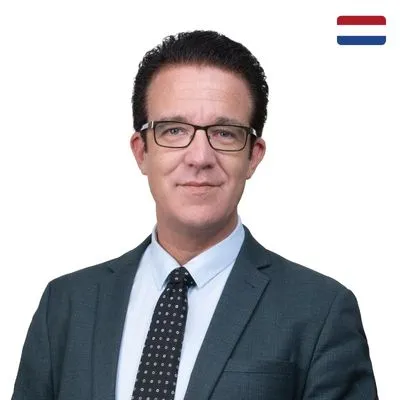
Perry Q Wood est le président sortant de l'Institut australien de droit administratif et l'un des principaux avocats australiens spécialisés dans l'administration, l'immigration et les droits de l'homme.
Décrivez-nous votre situation et l'un de nos avocats spécialisés dans les questions de migration vous contactera dans les plus brefs délais.