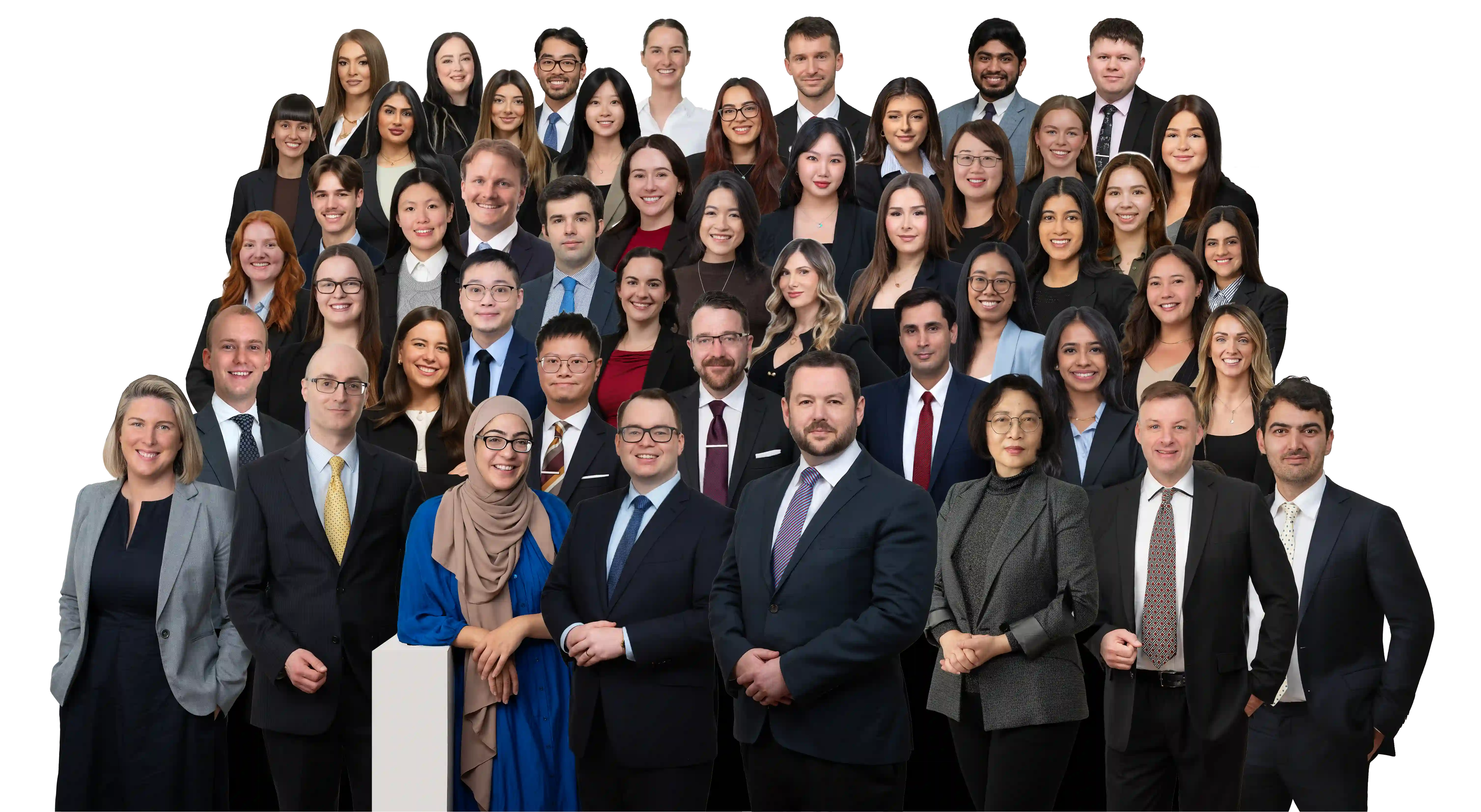
オーストラリア最大の独立系移民法専門法律事務所。無料相談をご利用ください(利用規約が適用されます)。
お困りですか?週7日対応いたします。


あなたの状況をお聞かせください。私どもの移民弁護士が折り返しご連絡いたします。
あなたの状況をお聞かせください。私どもの移民弁護士が折り返しご連絡いたします。


2026年 テルストラ・ベスト・オブ・ビジネス・アワード ノミネート

Australia's continued growth of its infrastructure projects, its shift toward renewable energy sources and new technologies have created increasing demands for experienced engineers. The Federal Government of Australia and each state and territory government continue to provide migrant visas as part of their general skilled migration (GSM) strategy to help fill the gap in qualified engineers being employed by businesses throughout urban centers and rural/remote communities. There are also several migration routes available to support qualified international engineers and technical managers to enter Australia temporarily and/or permanently.

「ベスト・ローヤーズ」の
部門で2026年および2027年のランキングに選出

オーストラリア法曹賞の受賞者

2027年 オーストラリアのベスト法律事務所ランキング(
)

ドイル社の『
』ガイドにおいて、2023年から2026年までの「
」分野における主要な移民法弁護士としてランクイン
お客様の状況をお聞かせください。
お客様の状況をお聞かせください。


私たちのサービスには隠れた費用はありません。私たちの料金は、料金契約書に明確に記載されています。

オーストラリアビザの申請から発給まで、直接弁護士にご相談いただけます。

経験豊富な弁護士が定期的に最新情報を提供し、ビザの経路について分かりやすく説明します。

私たちは、ビザ申請サービスに関して、お客様の満足度を保証します。

ビザの種類によっては3~6ヶ月の分割払いも可能。

Qualified engineers may be able to migrate to Australia via one or more of the GSM visa categories and other employer sponsored visa options.
As most engineering professions appear on both the medium and longer term strategic skills lists, successful candidates will first need to pass a positive skills assessment prior to making an application for temporary or permanent employment in Australia.
| 職業 | ANZSCOコード | 権限の評価 | Primary Visa Streams |
|---|---|---|---|
| 土木技師 | 233211 | エンジニア・オーストラリア | Subclass 189Subclass 190Subclass 482Subclass 186Subclass 491Subclass 494 |
| 機械エンジニア | 233512 | エンジニア・オーストラリア | Subclass 189Subclass 190Subclass 482Subclass 186Subclass 491Subclass 494 |
| 電気技術者 | 233311 | エンジニア・オーストラリア | Subclass 189Subclass 190Subclass 482Subclass 186Subclass 491Subclass 494 |
| 構造エンジニア | 233214 | エンジニア・オーストラリア | Subclass 189Subclass 190Subclass 482Subclass 186Subclass 491Subclass 494 |
| 化学エンジニア | 233111 | エンジニア・オーストラリア | Subclass 189Subclass 190Subclass 482Subclass 186Subclass 491Subclass 494 |
| ソフトウェア・エンジニア | 261312 | Australian Computer Society (ACS) | Subclass 189Subclass 190Subclass 482Subclass 186Subclass 491Subclass 494 |
| ビザサブクラス | Pathway Type | Key Features & Requirements |
|---|---|---|
| Subclass 189 Skilled Independent Visa | Permanent General Skilled Migration | Points-tested permanent visa that does not require employer or state nomination, granting immediate permanent resident status upon visa grant. |
| Subclass 190 Skilled Nominated Visa | Permanent General Skilled Migration | Permanent visa requiring state or territory government nomination, granting additional points toward the migration threshold and immediate permanent residence. |
| Subclass 482 Skills in Demand Visa | Temporary Employer Sponsored | Enables approved Australian businesses to sponsor qualified engineers for temporary employment lasting up to four years, requiring relevant work experience and skills recognition. |
| Subclass 186 Employer Nomination Scheme Visa | Permanent Employer Nominated | Permanent residency pathway for engineers nominated by an approved employer under the Direct Entry or Temporary Residence Transition streams. |
| Subclass 491 Skilled Work Regional (Provisional) Visa | Provisional Regional Migration | Five-year provisional visa requiring regional state nomination or eligible family sponsorship, providing a direct pathway to permanent residency via the Subclass 191 visa. |
| Subclass 494 Skilled Employer Sponsored Regional (Provisional) Visa | Regional Employer Sponsored | Five-year provisional visa allowing regional engineering employers to address localised skill shortages, leading to permanent residency after meeting qualifying employment periods. |
Australian engineering firms, consultancy groups, construction entities, and technology enterprises can actively sponsor qualified overseas personnel to fill technical roles. To sponsor international workers under standard business sponsorship, an business must demonstrate that it is lawfully operating, establish a genuine need for the nominated position, and commit to paying salary rates that meet statutory market thresholds under Australian employment standards.
Where standard skilled occupation lists or statutory requirements do not accommodate unique engineering roles, businesses may explore specialised labour agreements. Company specific labour agreements or Designated Area Migration Agreements (DAMAs) allow employers to negotiate tailored terms directly with the Department of Home Affairs, securing custom occupation inclusions, age exemptions, or salary concessions to maintain operational capacity.

While demand extends across all major technical disciplines, several key fields experience notable workforce deficits within Australia:
Engineers experienced in major transport networks, bridges, high-density residential development, and large-scale public utilities.
Specialists in power generation, transmission infrastructure, battery storage technology, and grid integration for renewable energy projects.
Personnel proficient in resource extraction, geotechnical assessment, heavy processing equipment, and site remediation.
Technical experts skilled in advanced manufacturing, HVAC system design, industrial automation, and mechanical plant maintenance.
Professionals managing complex software development, embedded systems, enterprise architecture, and cyber-physical security integration.
Senior professionals holding cross-disciplinary expertise who oversee multi-million-dollar project delivery, contracts, and regulatory compliance.
A mandatory prerequisite for most skilled engineering visa pathways is obtaining a formal positive skills assessment. For the majority of engineering occupations under the Australian and New Zealand Standard Classification of Occupations (ANZSCO) framework, Engineers Australia serves as the designated assessing authority.
The assessment pathway depends on where an applicant obtained their qualifications:
Graduates holding qualifications recognised under international accords such as the Washington Accord (for Professional Engineers), Sydney Accord (for Engineering Technologists), or Dublin Accord (for Engineering Associates) can access streamlined qualification equivalence pathways.
Applicants holding qualifications from non-accredited institutions or non-signatory nations must submit a Competency Demonstration Report (CDR). The CDR is a comprehensive technical portfolio comprising a record of Continuing Professional Development (CPD), three detailed career episodes focusing on personal engineering contributions, and a summary statement mapping core competencies to Australian standards.
Applicants must also satisfy minimum English language proficiency standards unless specific exemptions apply. Once a positive skills assessment is secured, candidates can lodge an Expression of Interest (EOI) through the federal SkillSelect system to seek state nomination or an invitation to apply for a permanent visa.
Navigating the legal intricacies of Australian skilled migration requires detailed planning, accurate occupation alignment, and comprehensive document preparation. At Australian Migration Lawyers, our experienced team provides strategic advice to both individual engineering professionals and corporate entities seeking to recruit international talent.
We assist clients across every stage of the process, including structuring skills assessment applications for Engineers Australia, managing Standard Business Sponsorship approvals, executing complex labour agreements, preparing decision-ready visa applications to reduce potential departmental delays, and representing clients before the Department of Home Affairs. Our primary focus is ensuring full statutory compliance while implementing migration strategies designed to maximise your chances of success.
Contact us today to arrange a consultation with a member of our legal team.






































私たちは、あなたのお住まいがどこであろうと、専門的な移住のアドバイスとサポートを提供します。オーストラリア国内にお住まいの方は、弊社オフィスまたはオンラインにてご相談いただけます。

If the Department of Home Affairs refuses a visa application or revokes an employer nomination, affected parties may have the right to seek a merits review before the ART. Strict statutory timeframes apply to lodge an application for review. Our legal team can evaluate the decision, identify potential legal grounds for review, and represent you throughout tribunal proceedings.
While a positive skills assessment and visa approval allow an engineer to enter Australia, specific state or territory jurisdictions require formal registration or licensing before an individual can practice independently or sign off on engineering designs. For example, Queensland and Victoria maintain statutory registration schemes for professional engineers. We can assist in identifying state-specific compliance requirements as part of your broader migration strategy.
An accredited qualification pathway applies to engineering degrees completed in countries participating in international agreements like the Washington Accord. These degrees are recognised as substantially equivalent to Australian standards, requiring simpler documentary evidence. Non-accredited degrees require the Competency Demonstration Report (CDR) pathway, where applicants must write detailed technical career episodes demonstrating how their individual workplace or academic project experience meets Engineers Australia competency standards.
For permanent General Skilled Migration visas, such as the Subclass 189 Skilled Independent visa and Subclass 190 Skilled Nominated visa, the statutory age limit is 45 years at the time the Department of Home Affairs issues an invitation to apply. However, certain employer-sponsored pathways or specialised labour agreements may offer age exemptions or higher age thresholds for highly qualified personnel under specific circumstances.
Perry Q Wood is Immediate Past President of the Australian Institute of Administrative Law and one of Australia's leading administrative, immigration and human rights lawyers.