Australia's largest independent migration law firm. Get a FREE Consultation T&C's apply
Need help? Our lawyers and migration agents are available 7 days a week to assist.


Tell us about your situation, and our immigration lawyers will get back to you shortly.
Tell us about your situation, and our immigration lawyers will get back to you shortly.


2026 Telstra Best of Business Awards Nominee
A Partner visa subclass 820/801 enables you to apply whilst in Australia to be with your de facto partner or spouse, but the application process can be complex and demanding. At Australian Migration Lawyers, we provide expert legal support and guidance to make it as straightforward as possible.

Ranked in Best Lawyers
2026 & 2027

Don (Susantha)
Katugampala

Ranked in Leading Immigration Lawyers 2023, 2024, 2025 & 2026

Ranked in Best Law Firms Australia 2027

Winner of Most Trusted Australian Migration Law Firm 2023-2026

Ranked 1st for migration law in 2023, 2024 & 2025
Ranked in the top migration lawyers 2023, 2024, 2025 & 2026

Ranked the best migration law firm 2024 & 2025
Tell us about your situation, and our immigration lawyers will get back to you shortly.
Tell us about your situation, and our immigration lawyers will get back to you shortly.


There are no hidden costs for our services. Our fees are clearly set out in a Client Agreement.

From the first same-day response to the granting of your visa, you’ll have direct access to a lawyer.

Our experienced lawyers will give you regular updates and clear explanations of visa pathways.

We are committed to delivering professional and client-focused service throughout your visa application journey.

Three to six-month instalment options are available on some visa types.

If you are the spouse or de facto partner of an Australian citizen, Australian permanent resident, or eligible New Zealand citizen, you may be eligible to apply for a partner visa from within Australia.
Essentially, the application combines two stages: the subclass 820 partner visa is a temporary visa, while the subclass 801 is the permanent visa that lets spouses or partners live in Australia indefinitely.
There are two main streams of partner visas, which are distinguished by their sets of subclasses. The Partner visa (subclass 820/801) can only be applied for by onshore applicants, while the Partner visa (subclass 309/100) is for offshore applicants. If you are currently outside Australia, please refer to the Partner visa subclass 309/100 page.
If you satisfy all eligibility requirements, you will typically be granted a temporary Partner visa (subclass 820) at first. This is a substantive visa that allows you to live, work, study, and travel without restriction. In most instances, you can also access Medicare once a valid application has been lodged. After approximately two years after the application for the temporary visa, you will then become eligible for assessment for the permanent partner visa (subclass 801). Once it is granted, you become a permanent resident of Australia and enjoy the full range of benefits and entitlements available to permanent residents.
Before you can make a valid application for a Partner visa (subclass 820/801), Australian migration law requires the following:
Same-sex partners are eligible to apply for this visa. This is important to note because many people from the LGBTQI+ communities think they have only one option: to apply for a temporary or permanent humanitarian visa.

The principal benefit of a Partner visa is the stability it provides for you and your sponsoring partner. It enables you to live together and continue building a life in Australia without the anxieties that accompany a temporary visa status.
The Partner visa program grants eligible applicants a range of benefits even before obtaining permanent residency. As a subclass 820 partner visa holder, you can work without restriction and are entitled to minimum wage protections under Australian law. Further benefits include the ability to study without restriction, travel in and out of Australia, and access Australia's public healthcare scheme, Medicare.
As a permanent partner visa (subclass 801) holder, in addition to the above, you can enjoy full access to Medicare, pay domestic student fees at Australian education institutions, apply for citizenship after meeting the general residency requirements, and sponsor eligible family members to come to Australia under relevant programs.
The Partner visa application process has many technical elements and requires a significant amount of documentary evidence to satisfy the Australian government that you are in a genuine and continuing relationship with your sponsoring partner.
The Partner Visa (Subclass 820) allows the spouse or de facto partner of an Australian citizen, permanent resident, or eligible New Zealand citizen to live in Australia temporarily. It’s the first step towards permanent residency under the partner visa (subclass 801). Applicants must provide compelling evidence of a genuine relationship and meet health and character requirements.
Each year, a significant number of partner visa applications are refused, often due to insufficient evidence that the relationship is genuine and continuing. To support your application, we provide a comprehensive checklist to help you meet the relevant legislative criteria and provide strong proof of your relationship. Evidence is critical.
The Department of Home Affairs will assess partner visa applicants based on the history of their relationship, cohabitation, the nature of the household, and shared financial responsibilities. A well-prepared application depends on providing thorough documentation. A strong case includes statements from friends and family.
Submitting incomplete documents leads to unnecessary stress and potential delays. Let us support you through the partner visa process for a smoother and more informed journey

There are two stages to the onshore partner visa – the subclass 820 (temporary) stage and the subclass 801 (permanent) stage.
To apply for the partner subclass 820 visa, you must provide evidence to demonstrate that your de facto relationship or marriage is genuine and continuing. The threshold to satisfy the Department’s requirements is high, so significant documentary evidence is required. Other personal documents will also be required, such as your identity documents and police certificates.
If satisfied, the Department will grant you a partner subclass 820 visa, which allows you to live, work, and study in Australia while you await a decision on the permanent stage of your application. You can also travel in and out of Australia without restriction and can access Medicare. Family members included in your application must also meet visa requirements.
After approximately two years following your application, subclass 820 visa holders become eligible to apply for the permanent Partner visa (subclass 801). This stage requires you to satisfy the Department that your relationship is still ongoing.
Applicants in longstanding relationships spanning several years may be eligible for a ‘double grant’ of the subclass 820/801 partner visa at the same time. We can work with you to prepare a request for a double grant if you satisfy the eligibility criteria.
Australian Migration Lawyers can help you prepare a thorough application to maximise your prospects of success. As legal professionals, we act in accordance with the Migration Act 1958 and our legal obligations, ensuring your application is thoroughly prepared and lawfully submitted.

Once you have been granted the subclass 801 visa, you are considered a permanent resident of Australia and can access the full range of benefits available to permanent residents. You can choose to remain a permanent resident, or you can apply for citizenship after meeting the relevant residency requirements.
If you choose to remain a permanent resident, you will enjoy a 5-year travel facility on your subclass 801 visa. This means you can travel in and out of Australia for up to 5 years. If you wish to continue to travel internationally after 5 years, you will need to apply for a Resident Return Visa (subclass 155), which may be renewed, provided you meet the criteria. Our team of qualified Australian Migration Lawyers can assist you with Citizenship or Resident Return applications to help you navigate the process with confidence.
Although you are not obliged to become an Australian citizen, there are a number of benefits that come with Australian citizenship. These include consular services and support whilst overseas, visa-free travel to over 100 countries on an Australian passport, access to Australian government jobs, and freedom from visa compliance requirements.
The high rate of partner visa refusals each year underscores the importance of submitting a comprehensive and decision-ready application. At Australian Migration Lawyers, we provide valuable guidance and legal support to make the entire process as seamless as possible. We have supported many clients through successful partner visa applications and are experienced in handling complex cases.
At Australian Migration Lawyers, one of our key goals is to facilitate access to justice, and we do this by representing those who entrust us with their partner visa application.

There are two main costs associated with a subclass 820/801 Partner visa.
Professional fees payable to Australian Migration Lawyers to prepare your primary application
Our fees will vary depending on the circumstances of your application. Some applications will be more complex than others, and our fees will be quoted accordingly. We work on a fixed-fee basis rather than billing hourly to provide our clients with certainty about what the total costs associated with their partner visa application will be. We offer payment plans based on individual circumstances.
Book a free consultation with one of our qualified lawyers to get a quote.
Department fees
The current base application charge for the Department of Home Affairs in relation to partner visa subclass 820 applications is $11,710. This fee must be paid upfront at the time of lodgement, and the Department does not accept split payments. Please note that this charge is set by the Department and is subject to change without notice. You can pay using debit/credit card, PayPal, UnionPay, and BPAY.
Applying for a visa to Australia can be complex. With help from our team of Australian Migration Lawyers, we can simplify the process and guide your application.

Organise a consultation time to speak with one of our lawyers. You can meet with us in person, via Zoom or telephone. Following this, we will send you paperwork that confirms our engagement to represent you.

We will prepare written submissions in support of your visa application. This will be tailored to your individual circumstances and be supported by relevant evidence.

We submit your application to the relevant body (Department of Home Affairs, courts or tribunal). We will continue to update you concerning the status of your application.

We will keep you informed about your application and notify you of the outcome. If the outcome is unfavourable and reapplication is possible, we can assist with the next steps.
The processing times for the Partner visa subclass 820 can vary depending on individual circumstances, including the strength of your application, the evidence provided, and the Department’s overall caseload.
While timeframes are not fixed, there are general trends that applicants can expect based on recent processing patterns:
If applications are incomplete or if the Department requests further documentation, delays can occur. Factors such as relationship complexity, missed character checks, or outdated health assessments often affect timelines.
At Australian Migration Lawyers, we focus on preparing 'decision-ready' applications that are as complete as possible to help reduce delays. For the most up-to-date processing times, please refer to the Department of Home Affairs website.
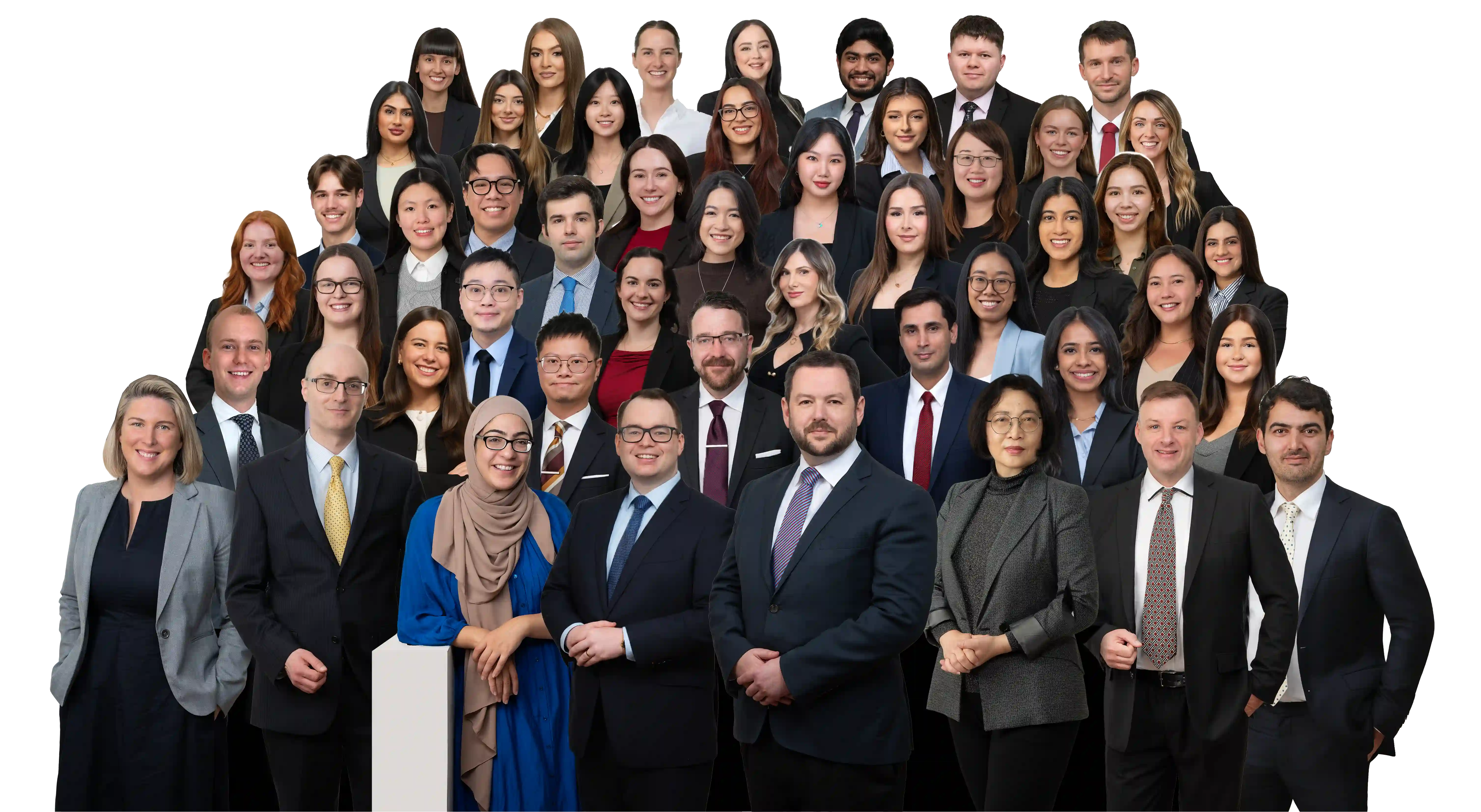
Our legal team at Australian Migration Lawyers comprises skilled professionals practising Australian migration law.
As lawyers, we cannot guarantee that your partner visa will be granted. The decision rests with the Department of Home Affairs, not any one representative, lawyer, or migration agent. However, our sound understanding of Australian migration law means that we are able to offer strategic legal advice and put the best case forward to seek a successful outcome.



.jpg)


%20(1).webp)
%20(1).webp)


.jpg)




.jpg)
.jpg)

%20(1)%20(1).webp)
%20(1)%20(1).webp)

%20(1).webp)
%20(1).webp)
%20(1).webp)


.jpg)

%20(3).jpg)

.jpg)




%20(1).webp)

%20(1).webp)




%20(7).jpg)
.jpg)
.jpg)
.jpg)

We offer professional migration advice and support, no matter where you are based. Those located in Australia have the choice of meeting with us at one of our offices or online, and for those offshore, we are available to you online.


.webp)


Read our most commonly asked questions about the subclass 820/801 Partner visas

If your de facto relationship or marriage ends while your visa application is being processed, you may still be eligible for the Partner visa (subclass 820/801) under certain special circumstances. These situations can include if you have experienced family violence, if you and your sponsor share a child, or if your sponsor has sadly passed away. If one or more of the above circumstances apply, it is important to seek legal advice about your options. Contact Australian Migration Lawyers for tailored support.
Yes, you can include your dependent children in your Partner visa application. A dependent child is typically under 18 years of age. It is important that they are included in your application before a decision is made on your temporary subclass 820 visa.
When you lodge a valid Partner visa application in Australia, you will typically be granted a Bridging Visa A (BVA). This visa activates when your current substantive visa expires and allows you to remain lawfully in Australia until your subclass 820 visa application is decided. A BVA generally permits you to work, study, and access Medicare. If you need to travel outside of Australia while your application is processing, you must apply for a Bridging Visa B (BVB) before you depart.
Not yet. The subclass 820 visa is a temporary visa that allows you to live in Australia while you wait to be assessed for the permanent visa. After a two-year waiting period from the date you lodged your initial application, you will become eligible for the permanent subclass 801 Partner visa assessment. Permanent residency is granted once your subclass 801 visa is approved.
The subclass 820 visa is a temporary visa that allows you to live and work in Australia until a decision is made on your permanent subclass 801 Partner visa application. You may remain in Australia lawfully on this visa as long as you continue to comply with all visa conditions.
You may be eligible to access Medicare once you have applied for the Partner visa and hold either a Bridging Visa A or the temporary subclass 820 visa itself. Upon the grant of the permanent subclass 801 visa, you will continue to have access to the public health system. We always recommend confirming your specific eligibility with Medicare directly after your visa is lodged or granted.
Yes. If you apply for a Partner visa while holding a Student visa, you must continue to pay international student fees and comply with all of your Student visa conditions. This obligation remains until your Student visa expires or your subclass 820 visa is granted, whichever occurs first.
Perry Q Wood is Immediate Past President of the Australian Institute of Administrative Law and one of Australia’s leading administrative, immigration and human rights lawyers.
Tell us about your situation, and we will get back to you shortly. Please note that all free consultations are 30 minutes.
Our experienced migration lawyers are here to help —risk-free. Ask about our No Visa, No Fee options and we'll guide you through every step of your journey.

%402x.svg)